Case Details
Real Patient Results
Traction Alopecia Before and After Photos | NYC
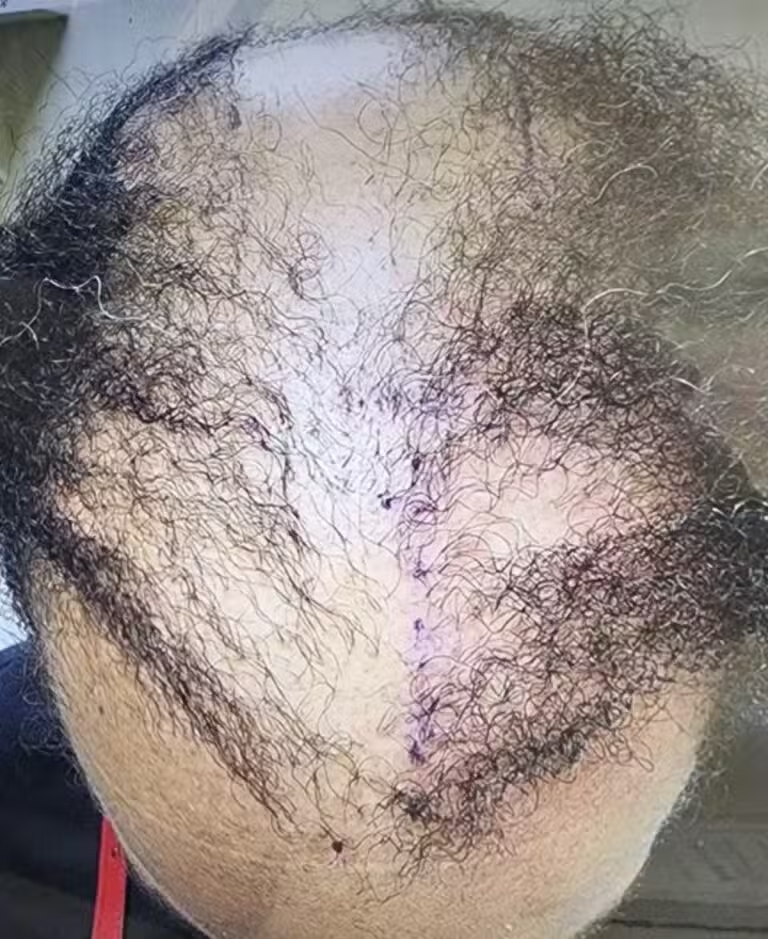
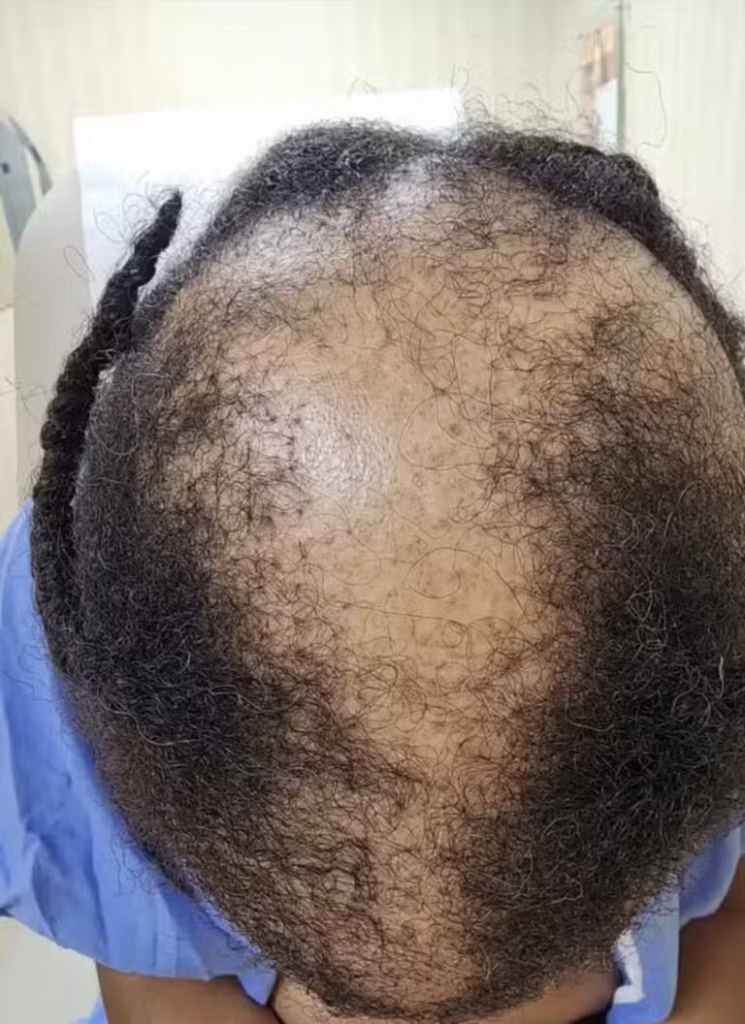
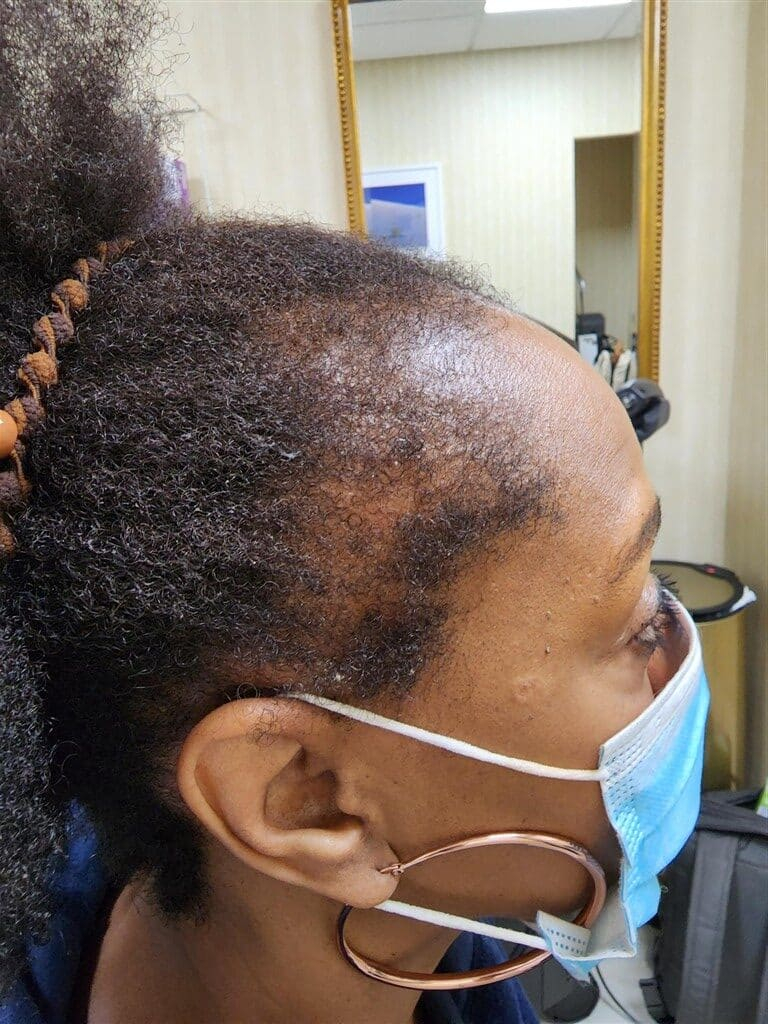
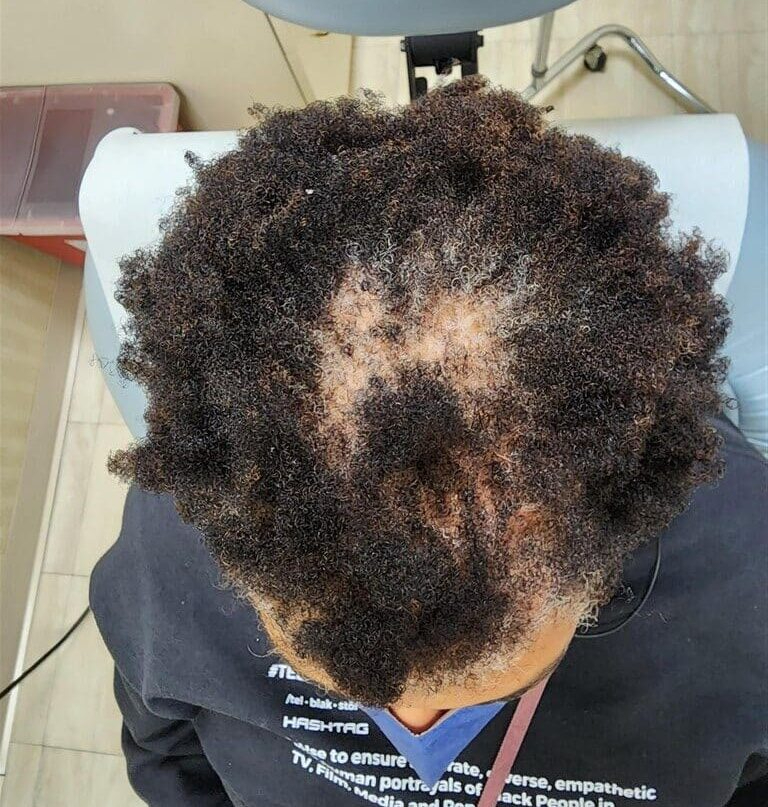
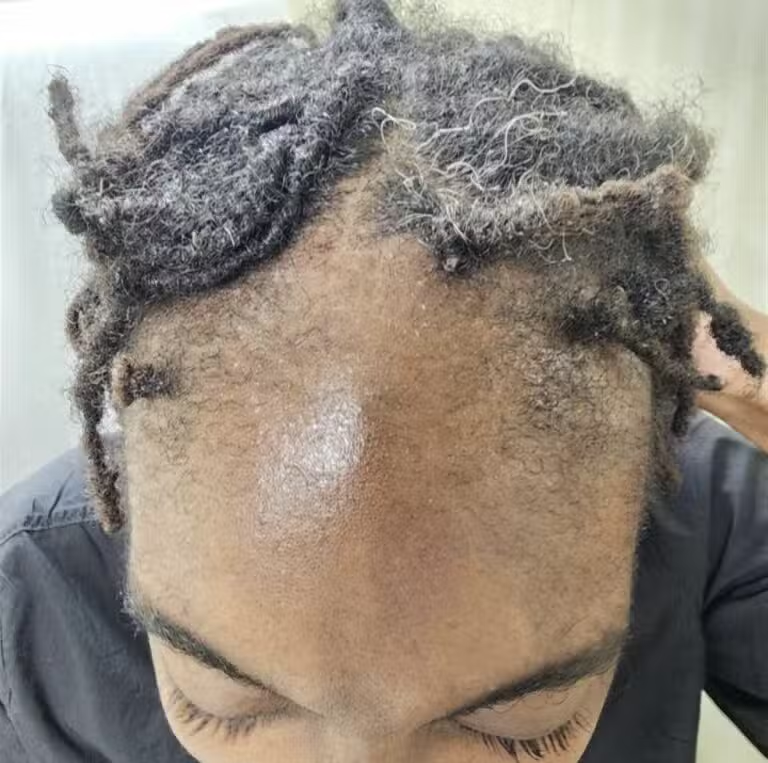
These traction alopecia before and after photos document real results from a patient treated at Aglow Dermatology in Manhattan by board-certified dermatologist Dr. Dina Strachan.
About This Patient
This patient presented with significant traction alopecia along her frontal hairline, temples, and edges — a pattern typical of long-term tension from braided styles. By the time she sought treatment, the hair loss was severe enough that she felt she had no choice but to keep braiding to conceal what she had already lost.
After a thorough consultation with Dr. Strachan, she began a series of three Alma TED hair restoration treatments, spaced one month apart. The before and after photos shown here were taken one month after her final session.
Her results allowed her to cut her hair shorter, wear it naturally, and stop using braids as camouflage. She was thrilled — and it showed.
What Causes Traction Alopecia?
Traction alopecia is hair loss caused by repeated, chronic tension on the hair follicles. It most commonly affects the hairline, temples, and edges — the areas most vulnerable to pulling.
Common causes include:
- Box braids, cornrows, and tight flat twists
- Heavy locs or dreadlocks
- Weaves, extensions, and sew-ins
- High or tight ponytails and buns
- Wigs secured with tension or clips
- Any style that consistently pulls on the same follicles
Traction alopecia is not limited to any one hair type, but it is especially common in patients with textured or natural hair who rely on protective styles.
Related: Traction Alopecia Reversible
Can Traction Alopecia Grow Back?
Yes — but timing matters.
When caught early, traction alopecia is often reversible. The follicles are stressed but still intact, and with the right treatment, regrowth is achievable.
Left untreated, however, chronic tension can lead to follicular scarring. Once scarring occurs, the follicles can no longer produce hair — and that loss becomes permanent. A hair transplant (opens in new tab) may be the only option in some cases.
This is why traction alopecia before and after results vary so widely: outcomes depend heavily on how early treatment begins and how advanced the follicular damage is at the time of evaluation.
Alma TED for Traction Alopecia Hair Regrowth
Alma TED is a non-invasive hair restoration treatment that uses acoustic energy and topical growth factors to stimulate the scalp and support follicular recovery. There are no needles, no surgery, and no downtime.
At Aglow Dermatology, Alma TED is integrated into a personalized hair loss treatment plan that may also include:
- Medical evaluation and diagnosis
- Oral or topical medications
- Scalp inflammation management
- Nutritional support
- Hair care guidance tailored to textured hair
The standard Alma TED protocol consists of three monthly treatments. Some patients see noticeable improvement within weeks of completing the series; others continue to improve in the months that follow.
What to Look for in the Before and After Photos
When reviewing traction alopecia before and after images, focus on:
- Hairline density — Is the front hairline fuller and more defined?
- Edge and temple coverage — Are previously bare or thin areas showing new growth?
- Scalp visibility — Is the scalp less exposed in the affected zones?
- Hair texture and length — Has the patient been able to change styling options as a result?
In this patient’s case, all four of these areas showed meaningful improvement after three Alma TED sessions.
Signs You Should See a Dermatologist
Schedule an evaluation if you notice any of the following:
- Thinning or receding edges or temples
- Hair that isn’t growing back after removing braids or extensions
- Scalp tenderness, itching, or inflammation along styled areas
- Small bumps or pimples at the hairline
- Shiny, smooth patches on the scalp where hair once grew
- Increased shedding around braided or tensioned areas
The earlier traction alopecia is evaluated and treated, the better your before and after results are likely to be.
Schedule a Traction Alopecia Consultation in NYC
Dr. Dina Strachan specializes in diagnosing and treating hair loss across all hair textures and backgrounds. If you’re concerned about traction alopecia — whether you’re just noticing early thinning or have been dealing with significant loss for years — a professional evaluation is the first step toward understanding your options.
Results vary. Not all traction alopecia is reversible. Early treatment offers the best opportunity for regrowth.
Contact Aglow Dermatology in Manhattan to schedule your hair loss consultation →
 Before
 After
After
Description: Frontal hair line
 Before
 After
After
Description: Left frontal hair line
 Before
 After
After
Description: Right frontal hair line