A Trusted Referral Dermatologist in New York City for Medical Providers and Hair Professionals
If you are looking for a referral dermatologist in NYC, Aglow Dermatology provides expert, responsive care for patients referred by physicians, nurse practitioners, physician assistants, and hair professionals.
Led by Dr. Dina Strachan, a board-certified dermatologist in Manhattan, our practice is built on clinical expertise, clear communication, and reliable follow-through—so you can refer with confidence.
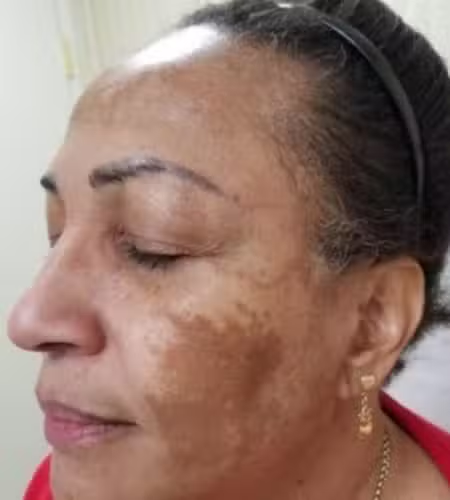
Who Chemical Peels for Melasma Are Best For
Not all melasma responds the same way, which is why chemical peels are selected based on skin type, pigment depth, and treatment history.
Chemical peels may be especially helpful if you have:
- Epidermal or mixed melasma (superficial)
- Mild to moderate pigmentation that has not fully responded to topical treatments
- Preference for a gradual, controlled improvement approach
- Concerns about or limited tolerance for laser-based treatments
In many cases, chemical peels are part of a combination approach, rather than a standalone treatment.
For some patients, topical treatments such as hydroquinone, tranexamic acid, or cysteamine may be tried first. Peels are often added when progress plateaus or additional improvement is desired.
How Chemical Peels Work for Melasma
Chemical peels improve melasma by:
- Removing excess pigment in the upper layers of skin
- Increasing skin cell turnover
- Enhancing penetration of topical treatments
They are often used in combination with prescription creams and sun protection.
Related: Vi Peel for melasma before and after
Types of Chemical Peels for Melasma
Chemical peels vary in strength and depth:
Related: Dermatologist Recommended Sunscreen for Melasma
Superficial Peels
(e.g., salicylic acid, light glycolic blends)
- Mild exfoliation
- Little to no visible peeling
Medium-Depth Peels
(e.g., modified Jessner’s, Vi Peels)
- More noticeable peeling
- A few days of social downtime
Deeper Peels
(e.g., higher-strength TCA)
- More aggressive resurfacing
- Typically avoided in melasma due to higher risk of complications
Your treatment is selected based on your skin type, melasma depth, and goals.
Chemical Peels in Skin of Color
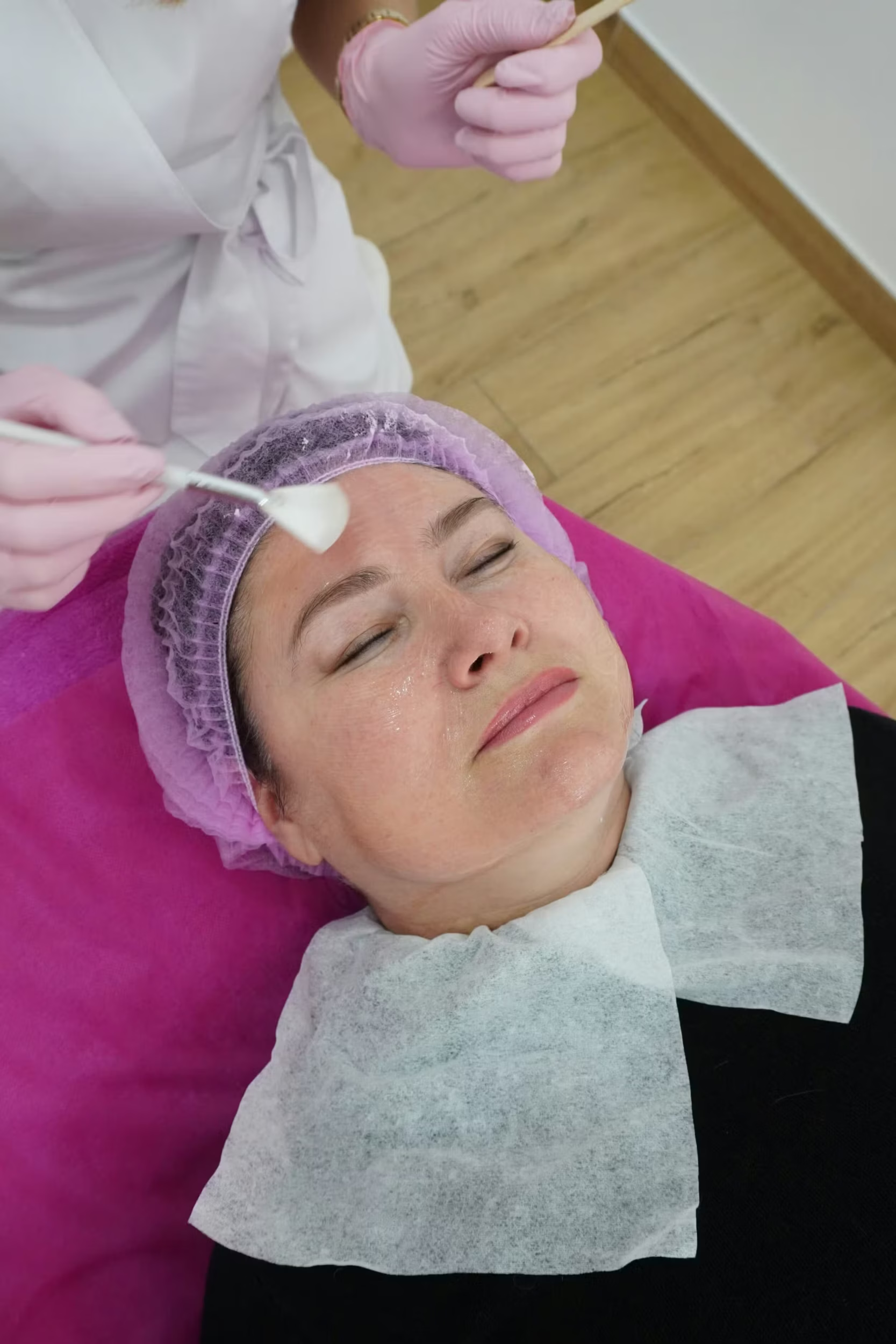
Chemical peels are widely used in patients with darker skin tones because they can be:
- Customized in strength and depth
- Performed gradually over time
- Integrated into a broader pigment-control strategy
However, in skin of color, treatment selection and technique are critical, as overly aggressive peels or improper preparation can increase the risk of post-inflammatory hyperpigmentation (PIH).
This is why melasma treatment in skin of color is typically conservative, layered, and combination-based, rather than aggressive or one-time correction-focused.
What Results and Downtime Can You Expect?
Downtime depends on the type and strength of peel:
- Some peels have minimal visible peeling or downtime
- Medium-depth peels may involve several days of flaking or peeling
- Recovery and visible peeling vary significantly between individuals
Improvement is:
- Gradual and cumulative
- Best seen over a series of treatments (often 3–6 or more)
Melasma is a chronic condition, and maintenance treatment is often needed to sustain results.
Risks and Limitations
- Temporary dryness, irritation, or peeling
- Risk of PIH if the peel is too aggressive or not properly selected
- Recurrence is common without maintenance and sun protection
Risk depends on peel depth, technique, and skin preparation.
Chemical Peels vs Laser for Melasma (STRENGTHENED DECISION FRAMEWORK)
| Feature | Chemical Peels | Laser |
|---|---|---|
| Depth | Varies by formulation and strength | Varies by device and settings |
| Downtime | Minimal to several days depending on peel type | None to several days depending on device |
| Risk | Technique and depth dependent | Technique, device, and settings dependent |
| Best for | Epidermal or mild–moderate melasma | Resistant, dermal, or mixed melasma |
| Role | Foundational or combination therapy | Targeted or adjunctive therapy |
Key point:
Melasma is not treated with a single modality. Most patients benefit from a stepwise or combination approach depending on response to topical therapy.
Related: laser for melasma
When to See a Dermatologist for Melasma
You should see a dermatologist if you suspect you have melasma or if pigmentation on your face is persistent, worsening, or not responding to over-the-counter products.
A dermatologist can:
- Confirm the diagnosis and distinguish melasma from other causes of hyperpigmentation (such as sun spots or post-inflammatory pigmentation)
- Create a personalized treatment plan based on your skin type and severity
- Prescribe effective topical treatments such as hydroquinone, tranexamic acid, or cysteamine
- Offer in-office procedures when appropriate, including chemical peels and laser treatments
Because melasma is a chronic and relapsing condition, a structured, medically guided plan is often key to achieving and maintaining improvement.
Frequently Asked Questions Chemical Peels for Melasma
Most patients benefit from a series of treatments spaced a few weeks apart.
Yes, when properly selected and performed with appropriate technique.
Not always. Some peels cause minimal visible peeling, while others involve a few days of flaking.
It depends on the peel. Some have little to no downtime, while others involve several days of peeling.
They can if too aggressive or not properly selected. Careful customization reduces this risk.
Yes. Combination therapy is often the most effective approach. Melasma is a chronic condition that often needs a maintenance treatment.
You should see a dermatologist if you suspect you have melasma or if pigmentation on your face is persistent, worsening, or not responding to over-the-counter products.
A dermatologist can:
- Confirm the diagnosis and distinguish melasma from other causes of hyperpigmentation (such as sun spots or post-inflammatory pigmentation)
- Create a personalized treatment plan based on your skin type and severity
- Prescribe effective topical treatments such as hydroquinone, tranexamic acid, or cysteamine
- Offer in-office procedures when appropriate, including chemical peels and laser treatments
Because melasma is a chronic and relapsing condition, having a structured, medically guided plan is often key to achieving and maintaining improvement.
References
- Sarkar R et al. Chemical peels for melasma: A review
- Studies on glycolic acid and combination peels in melasma
- Comparative studies of chemical peels vs laser showing similar MASI improvement
- Literature on safety of peels in skin of color
Ready to schedule a chemical peel for melasma with our board-certified dermatologist? Contact us here!