
Hair loss, with the medical name alopecia, can arise from many causes. These include genetics, hormonal changes, medical conditions, diet, stress, and hair care practices.
If you are seeking a hair loss dermatologist in NYC, see our team at Aglow Dermatology. We are here to provide an accurate diagnosis and tailored treatments. You can trust the expertise of board-certified dermatologist Dr. Dina Strachan to address your concerns.
Why see a dermatologist for hair loss?
Hair plays a crucial role in physical and emotional well-being. Hair is not a vital organ, but its presence-or absence-can significantly impact self-esteem. Hair loss can even signal underlying health issues.
Hair loss is an expected part of the hair growth cycle. Shedding between 50 and 100 hairs a day is completely normal. However, more than 125 hairs falling out a day might indicate hair loss. If that sounds relatable, you should visit a dermatologist for an evaluation.
Similarly, you should visit a dermatologist if:
-
Your overall hair is thinning
-
You find new areas of baldness
-
Your part is widening
-
Or your hairline is receding
Remember, significant hair loss can be an indicator of more serious health concerns. Beginning an effective hair loss treatment plan is not purely cosmetic. Seeking a dermatologist for hair loss treatment ensures that the root of your condition receives appropriate diagnosis and treatment.
About 50% of the population experiences some form of hair loss during their lifetime. Whether you’re dealing with thinning hair, bald spots, or excessive shedding, a female hair loss treatment specialist can help. At Aglow Dermatology, we’ll identify the cause and provide a custom treatment plan.
Understanding the Hair Growth Cycle
Hair growth follows a cycle which has 3 separate phases:
-
Anagen Phase: The growth phase of 2-7 years.
-
Catagen Phase: A transitional phase of about 2-3 weeks.
-
Telogen Phase: The resting phase of about 3 months, during which old hairs shed.
Conditions like stress-related shedding and certain medical treatments can disrupt the normal growth cycle. Understanding the cycle will help you manage your hair loss.
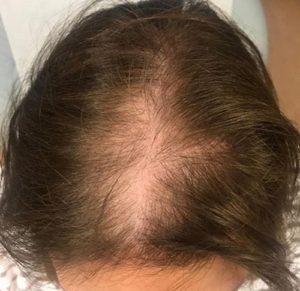
Female pattern hair loss before treatment
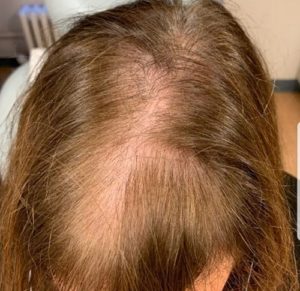
Female pattern hair loss after treatment
Categories of Hair Loss
Hair loss is not one-size-fits-all. At Aglow Dermatology, we classify alopecia into two main categories:
Scarring vs. Non-Scarring Hair Loss
-
Non-Scarring Alopecia: Includes androgenetic alopecia (pattern hair loss), alopecia areata, traction alopecia, trichotillomania, and telogen effluvium.
-
Scarring Alopecia: Conditions like frontal fibrosing alopecia, lichen planopilaris and central centrifugal cicatricial alopecia (CCCA), which can lead to permanent hair loss.
Primary vs. Secondary Hair Loss
-
Primary Hair Loss: Directly affects hair follicles, like alopecia areata.
-
Secondary Hair Loss: Results from external factors like illness, diet, or medications.
Dr. Strachan, our dermatologist in NYC, will determine the type of hair loss you’re experiencing. This will help guide your treatment process.
Diagnosing Hair Loss at Aglow Dermatology
Accurate diagnosis is the beginning of effective hair loss treatment. During your consultation, Dr. Strachan will perform a thorough evaluation. This includes:
-
Detailed health and family history
-
Physical examination
-
Blood tests
-
-
Cultures for fungal or bacterial infections
Comprehensive Hair Loss Treatments in New York
Once our expert dermatologist determines the cause of your hair loss, she will recommend custom treatments. Your plan will be unique for your unique situation.
Depending on your diagnosis, treatments may include:
-
Prescription medications or over-the-counter solutions (like minoxidil)
-
Supplements to address nutrition deficiencies
-
Injections (like corticosteroids or PRP therapy)
-
Non-surgical hair restoration (like Alma TED or red light therapy)
-
Laser therapy for scalp stimulation
-
Surgical hair transplantation for advanced cases
Our hair loss treatment NYC solutions address all types of alopecia. We’ll help you get the personalized care and results you deserve.
Special Focus: Hair Loss in Black Women
At Aglow Dermatology, we understand the unique needs of patients with textured hair. Black women are more prone to specific conditions like CCCA and traction alopecia. This is because of hair texture and grooming practices.
Dr. Strachan specializes in hair loss treatment for African American women, offering culturally sensitive and effective care. Your hair loss specialist should be familiar with the specific needs of your hair type.
Black hair has a unique and delicate hair texture. Although hair loss affects people of all ethnic backgrounds, African Americans experience certain types of hair loss more commonly.
This is because of:
-
Hair Texture: Curly and kinky hair is more fragile and prone to breakage with grooming. In addition, people with curly or kinky hair are more prone to developing ingrown hairs. Ingrown hair can cause inflammation, scarring, and hair loss.
-
Grooming Practices: Market research indicates that style is highly important to African American consumers. Some grooming practices for achieving certain hairstyles traumatize the hair and scalp. This can result in damage and hair loss.
-
Genetics: Some types of hair loss, such as central centrifugal cicatricial alopecia (CCCA), may be genetic. CCCA predominantly affects African American women. This type of hair loss is likely from a genetic predisposition to develop chronic inflammation in the scalp. This inflammation is a result of traumatic hair styling practices such as tight braids, tight weaves, or heavy dreadlocks.
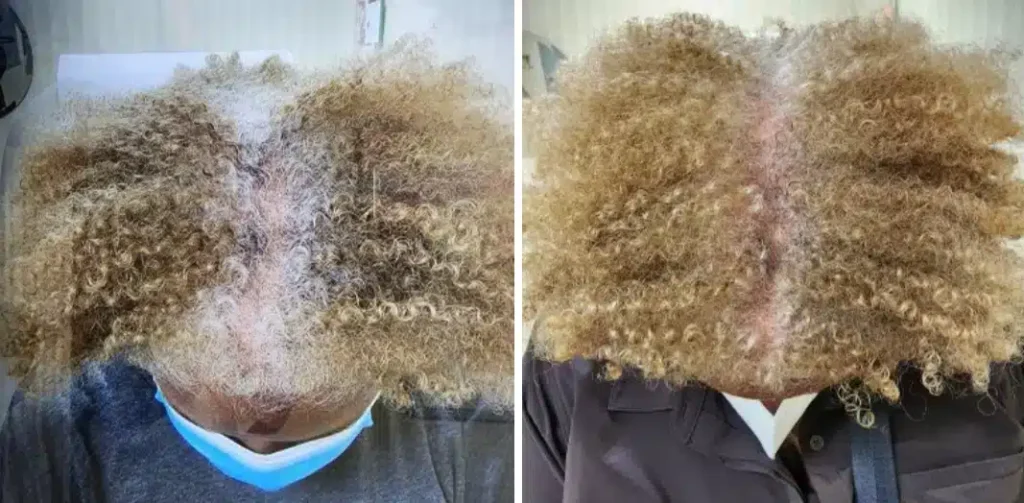
Perimenopausal hair loss treated with Revian Red
Hair Loss and Diet: The Connection
Nutritional deficiencies, such as low levels of protein, iron, zinc, or biotin, can contribute to hair loss. Not everyone benefits from supplements but targeted nutritional support may be part of your recovery plan. Our team will guide you in optimizing your diet to support healthy hair growth.
Preparing for Your Hair Loss Consultation
Before visiting our NYC office, please prepare for evaluation by wearing your hair loose. Avoid braids, weaves, or wigs to allow a full hair and scalp examination. This helps us evaluate your condition thoroughly.
FAQ About Hair Loss
It is normal to shed 50-100 hairs a day. However, if you notice your part widening, a receding hairline, bald patches, or excessive shedding (more than 125 hairs a day), you should schedule a consultation. Hair loss can sometimes signal underlying health issues, so getting a medical diagnosis is the first step to recovery.
CCCA is a form of scarring alopecia that primarily affects Black women. It typically starts at the crown of the head and spreads outward. It is often caused by a combination of genetics and hairstyling practices that cause tension or inflammation. Early diagnosis is critical because once the hair follicle is scarred, hair cannot regrow. Dr. Strachan specializes in diagnosing and treating CCCA to prevent permanent damage.
Yes. This condition is called Traction Alopecia. It occurs when tight hairstyles (like braids, weaves, or tight ponytails) pull on the hair roots over time, causing damage and hair loss, particularly around the hairline. If caught early, it is reversible; however, long-term tension can lead to permanent scarring and hair loss.
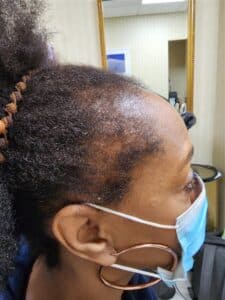
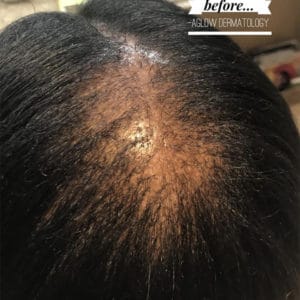
traction alopecia before Alma TED
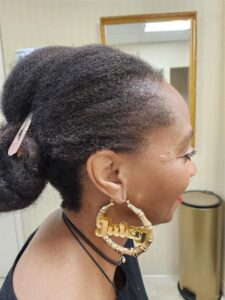
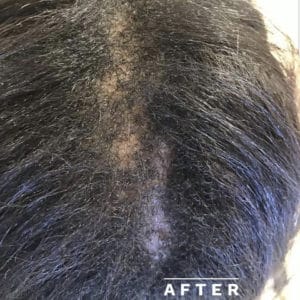
traction alopecia 1 year after Alma TED
Medical consultations for hair loss (to determine the cause/diagnosis) are often covered by insurance plans, just like any other medical visit. However, treatments considered “cosmetic” (such as Alma TED, PRP therapy, laser treatments, or hair transplants) are typically not covered. We will clarify your coverage and costs during your consultation.
Not always, but sometimes it is necessary. If the cause of your hair loss isn’t clear from a physical exam and history, Dr. Strachan may perform a scalp biopsy. This involves taking a very small sample of the scalp skin to be examined under a microscope. It is the “gold standard” for diagnosing complex conditions like scarring alopecia.
Hair hygiene plays a big role in scalp health. “Greasing” the scalp with heavy oils can sometimes clog pores or exacerbate conditions like seborrheic dermatitis (dandruff), which can lead to inflammation and shedding. Conversely, washing too infrequently can lead to buildup that hinders healthy growth. During your visit, we will create a customized hair care regimen suitable for your specific hair texture and condition.
It depends on the type of alopecia you have.
- Non-Scarring Alopecia (like shedding from stress or hormonal thinning) is often reversible with treatment.
- Scarring Alopecia (like CCCA or Lichen Planopilaris) destroys the hair follicle. This is why urgent care matters: We want to stop the inflammation before it becomes permanent scarring
Contact Aglow Dermatology: Your Trusted NYC Hair Loss Specialist
If you’re experiencing hair thinning, bald patches, or excessive shedding, you’re not alone; we can help. Schedule a consultation with our hair loss dermatologist in NYC today. Call us at 212-627-1004 or fill out the contact form on our website.
Can’t make it to New York City? Learn about our telemedicine for hair loss services!
Explore More: Hair Loss Videos and Resources
If you’re interested in learning more, visit our YouTube channel for expert advice on hair care and alopecia. Discover in-depth discussions and tips for managing hair loss effectively.