Hair restoration is any method that helps someone who is balding or has alopecia grow more hair. The term usually refers to the surgical procedure of a hair transplant. There are, however, also effective non-surgical procedures and medical techniques to get hair to grow. Technological advances allow us now to offer Alma TED, a non-invasive, in-office, pain-free hair treatment for men and women.
So, what is this new treatment?
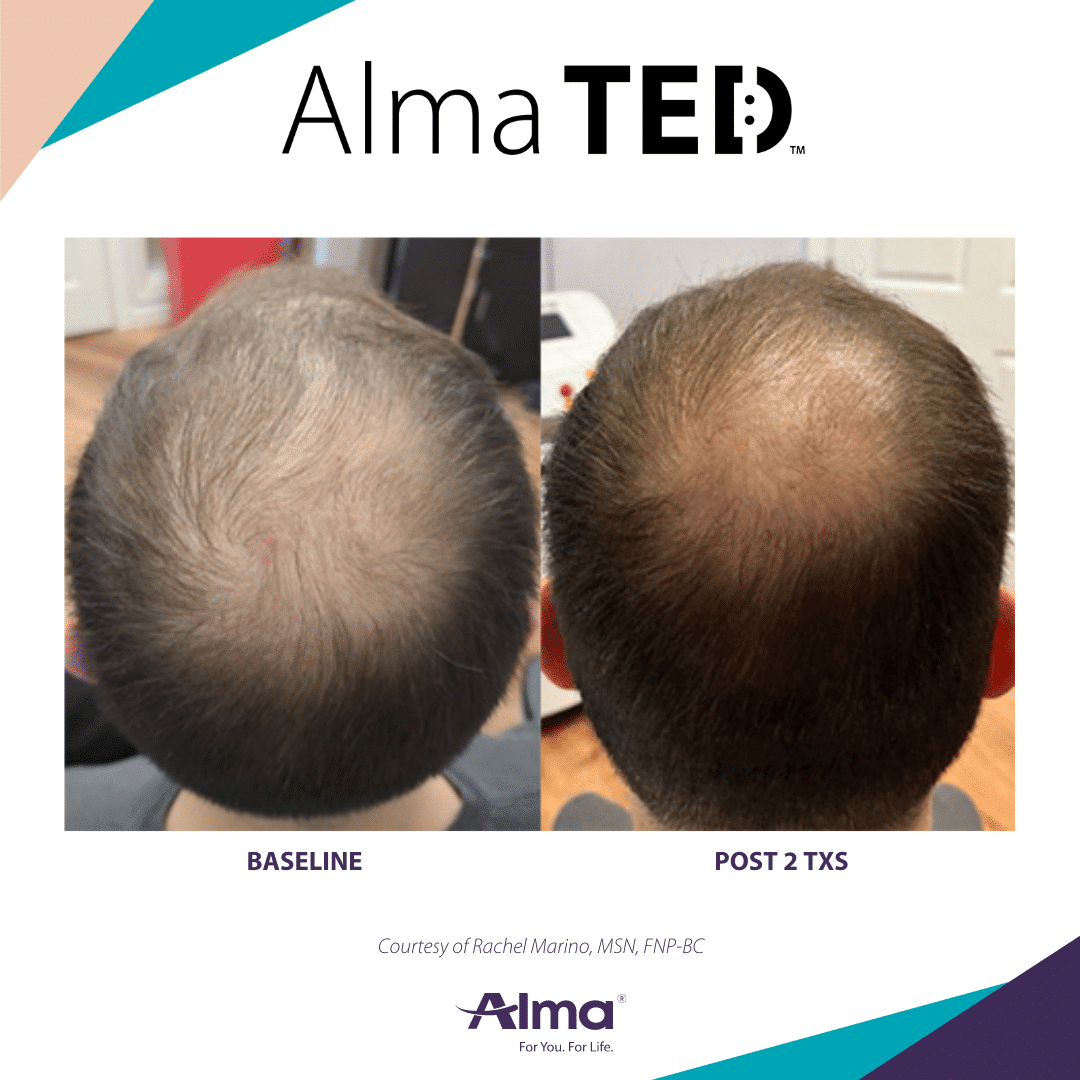
Alma TED is an ultrasound-based device that allows the delivery of standardized growth factors to the hair follicles in the scalp without needles or surgery. It increases blood flow to the follicles, resulting in thicker, stronger hair. At Aglow Dermatology in New York City, these treatments are performed by board-certified dermatologist Dr. Dina M. Strachan, MD.
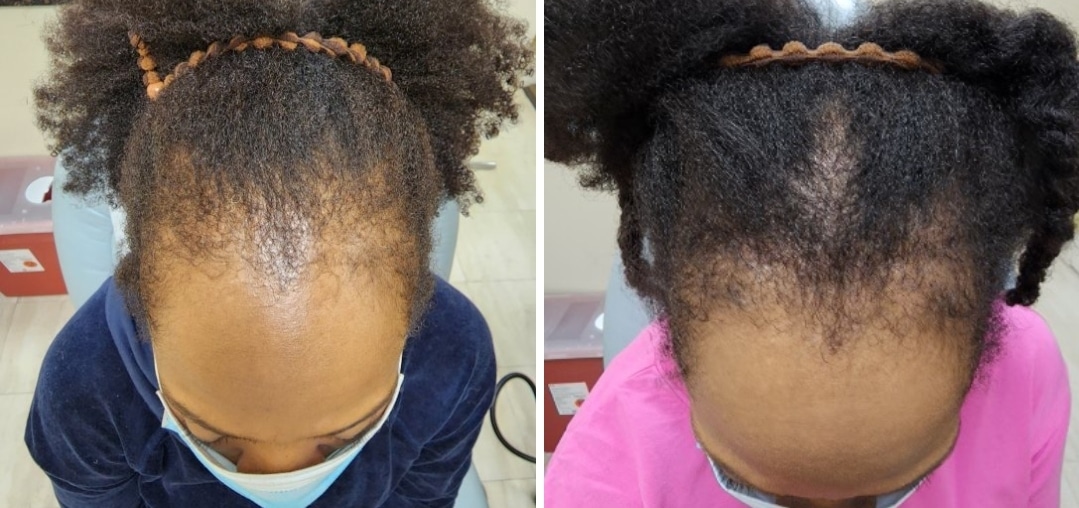
Alma TED before and after: 1 month after 1 treatment for traction alopecia
See the 1 year follow up on this patient in our before and after gallery here!
WATCH: Alma TED Explained
Who is a candidate for Alma TED?
Anyone with hair loss or alopecia who wants to improve the appearance of their hair may benefit from a treatment. This device is FDA-cleared for men and women with androgenetic alopecia. These are also known as male-pattern hair loss and female-pattern hair loss.
Like many other hair loss treatments officially approved for androgenetic alopecia, such as minoxidil (Rogaine) and finasteride (Propecia), Alma TED, too, has also been shown in studies and practice to be effective in other types of hair loss. While Alma TED is FDA-cleared for pattern hair loss, we have also observed meaningful improvement in select patients with scarring alopecia in clinical practice. These treatments are considered off-label and are based on physician experience rather than large clinical trials. Outcomes depend on the presence of viable follicles and control of underlying inflammation.
In the media: Dr. Strachan, and Alma TED, featured in The Scratch in The New York Times discussing hair loss.
Is PRP not working for hair loss?
PRP, which stands for platelet-rich plasma, is a popular treatment for hair loss. It involves harvesting the patient’s blood and spinning it down to collect growth factors. At times PRP works. Often, however, the results are disappointing. PRP depends on the quality of the patient’s growth factors which can vary from person to person. Blood growth factors also decline in quality with age.
Alma TED vs PRP treatment for baldness
In addition to providing consistent, standardized growth factors, the Alma TED procedure is pain-free, blood-free, and needle-free, unlike PRP. The treatment time is shorter and does not require numbing.
Alternative to Hair Transplant
While traditional hair transplant surgery involves removing hair follicles from a donor site, usually the back or sides of the scalp, and grafting them to areas of thinning or baldness, it’s an invasive procedure that requires downtime and enough healthy donor hair to be effective. For many people, this may not be an option due to limited donor density or a desire to avoid surgery. Alma TED is a powerful non-surgical alternative to hair transplant that uses ultrasound and air pressure to deliver a proprietary growth-stimulating serum deep into the scalp. This innovative treatment stimulates dormant, but viable, hair follicles to grow thicker, healthier hair. For patients with minimal existing hair, Alma TED may improve scalp coverage enough to delay or eliminate the need for surgery, or even make someone a better transplant candidate by reducing the size of the area needing grafts.
Alma TED treatment
The treatment is pain-free, needle-free, and takes approximately 25 minutes. First, the technician divides the scalp into 4-5 sections, and a vibrating device is placed against the skin. The first pass is to prime the skin to open channels. Then the TED+ Hair Care Formula, which contains a variety of growth factors, is applied and rubbed into the skin. A second round of the device then drives the hair growth solution into the skin, where it stimulates the hair follicles.
How many treatments will I need?
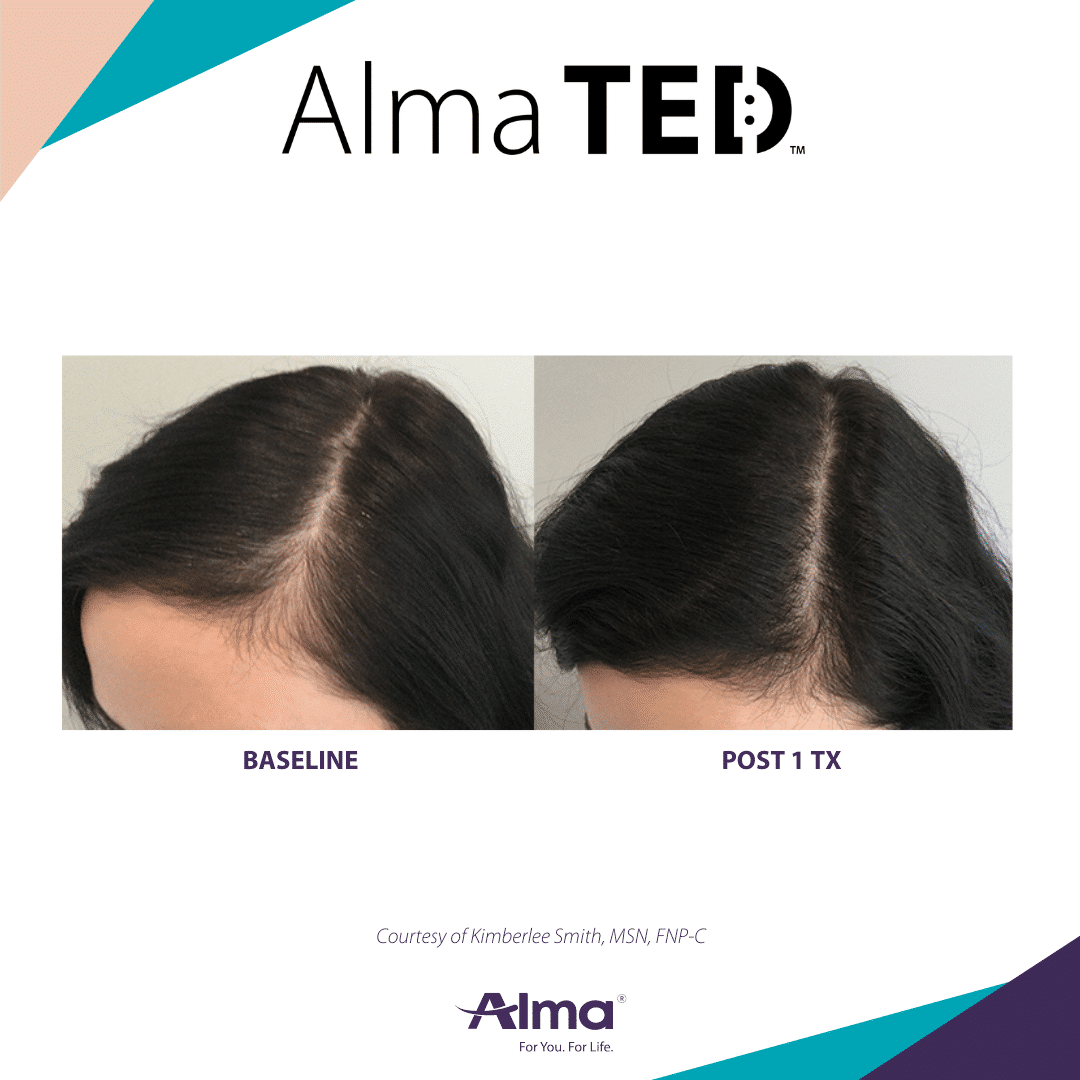
There can be improvement even after the first visit, however, it is generally recommended to do 3 treatments one month apart.
Is Alma TED safe?
This is a minimally invasive treatment with a low risk of side effects. The procedure involves no needles, or cutting, however, some patients report temporary scalp discomfort, and redness. If one has very thin skin there may be some mild trauma. There is no shedding associated with this procedure. A ringing sensation may be associated with treatment. Hair can grow back darker.
Is Alma TED covered by insurance?
No. Like most hair restoration procedures, this falls into the category of cosmetic.
Alma TED cost
The cost of each hair restoration treatment at Aglow Dermatology is $1000.00.
How to prepare for your treatment
Come to your appointment with clean, dry hair. The area to be treated should be accessible. There should be no product in your hair.
Aftercare
After your treatment don’t wet your hair, apply product or shampoo for 24 hours. Schedule your follow-up in 1 month.
Alma TED near me
Got hair loss? Alma TED is cutting-edge technology that is a great option for pain-free, easy and effective hair restoration. If you are looking for prp for thinning hair consider Alma TED as an alternative.
Read what our patients are saying!
Do you want to find out if the Alma TED is the right approach to address your hair loss?
Are you looking for Alma TED hair treatment near me and can come to New York City?
We are accepting new patients!
Schedule a consultation with our board-certified dermatologist and hair loss expert here!
I am transformed! I wasn’t even thinking about my hair loss when I went for a routine visit with the doctor for something else. She is very thorough and noticed the issue. She suggested this new treatment called Alma TED. I gave it a try. My hair is growing back! It works so fast. I didn’t think it was possible. I no longer have to hide. See a hair loss expert if you have this problem. Don’t start just trying random treatments. There is hope.
I can appreciate now that Dr. Strachan is a hair loss expert. She examined me and recommended a great treatment for me. I am getting Alma TED treatments for my alopecia. I’ve had two. Even after the first one I saw a difference. I was getting overwhelmed looking at options online that I wasn’t sure would work. Thank you, Dr. Strachan
Alma TED Hair Restoration: Frequently Asked Questions
Alma TED is FDA-cleared for the treatment of androgenetic alopecia (male and female pattern hair loss). FDA clearance means the device has been reviewed for safety and substantial equivalence to existing technologies. It does not mean guaranteed results, and outcomes vary by patient.
Alma TED works best in patients with:
Early to moderate androgenetic alopecia
Hair thinning with miniaturized (but still active) follicles
Traction alopecia where follicles are not permanently scarred
It is less effective or ineffective in areas of complete follicular destruction, such as long-standing scarring alopecia.
Alma TED is not FDA-cleared for scarring alopecias. In selected cases, it may be used off-label to support hair density or scalp health where follicles remain partially active. Results are variable and should be discussed carefully during consultation.
PRP (platelet-rich plasma) relies on growth factors derived from the patient’s own blood, which can vary significantly based on age, health, and platelet quality.
Alma TED delivers standardized growth factors using ultrasound-based trans-epidermal delivery. Advantages include:
No needles or blood draw
Minimal discomfort
Consistent formulation
PRP may still be appropriate for some patients; Alma TED is an alternative for those who cannot tolerate injections or have had limited PRP response.
Most patients undergo a series of three treatments, spaced approximately one month apart. Maintenance treatments may be recommended depending on the type and progression of hair loss.
Hair growth is slow and cyclical. Typical timelines:
Reduced shedding: 1–3 months
Visible thickening: 3–6 months
Peak results: 6–9 months
Results vary, and continued progression of genetic hair loss is possible without maintenance or adjunctive therapy.
No hair restoration treatment permanently stops genetic hair loss. Alma TED may improve hair density and thickness, but maintenance treatments or combination therapy (topicals, oral medications, or other in-office procedures) may be needed to sustain results.
Alma TED is generally well tolerated. Reported effects may include:
Mild scalp warmth or tingling during treatment
Temporary scalp sensitivity
Rare transient redness
Because there are no needles, bleeding, or anesthesia, downtime is minimal.
You may not be an ideal candidate if you have:
Complete follicular loss in the treatment area
Advanced scarring alopecia
Unrealistic expectations of full hair restoration
A medical evaluation is essential to determine candidacy.
Yes. Alma TED is often combined with:
Topical or oral hair-loss medications
Laser/light-based therapies
Medical management of underlying scalp conditions
Combination therapy often yields better long-term outcomes.
Hair loss has many causes. Alma TED could be right for your if you have viable hair follicles despite your alopecia. A consultation with a board-certified dermatologist is the best way to determine whether Alma TED fits your diagnosis, goals, and timeline.
Whether Alma TED is worth it depends on the type of hair loss you have, what other treatments you’re using, and what you expect it to add to your plan.
Alma TED is FDA-cleared for androgenetic alopecia (male and female pattern hair loss), with studies showing results lasting months after treatment is completed. Keep in mind, though, that pattern hair loss is a chronic condition that requires ongoing management — even after a hair transplant, androgenetic alopecia can continue to progress, so maintenance treatment is still necessary.
In our practice, Alma TED is often worth it because it can:
- Boost hair density to a level that other treatments sometimes cannot achieve
- Reduce the size of the affected area, even when a hair transplant is being considered
- Rapidly regrow hair that you then maintain with other treatments
While androgenetic alopecia is the on-label use, Alma TED can also be effective off-label for other types of hair loss. For traction alopecia in particular, once the source of tension is removed, Alma TED can even serve as a long-term solution.
The best way to know whether Alma TED is worth it for you is a consultation, where we can evaluate your hair loss and recommend how it fits into your treatment plan.