


Mole Removal in New York City
Finding a trusted dermatologist to remove moles is essential, whether you are concerned about a changing spot or simply want to improve your complexion. At Aglow Dermatology in New York City, Dr. Dina D. Strachan, MD, combines medical expertise with an aesthetic eye to ensure safe and effective treatment.

We understand that patients often have different goals—some need a medical diagnosis for a suspicious lesion, while others are looking for beauty mark removal to boost their confidence. Regardless of the reason, our priority is your health and safety.
Medical Mole Removal: Safety First
It is a strict policy at Aglow Dermatology that we never cauterize (burn) moles.
When a mole (nevus) is removed, it is critical to preserve the tissue so it can be analyzed under a microscope. Cauterizing a mole destroys the cells, making it impossible to determine if the lesion was benign or cancerous.
-
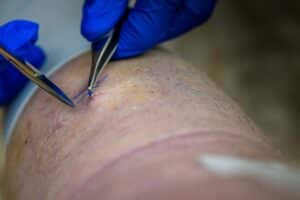
The Procedure: Moles are always either shaved or excised (surgically cut out).
-
Pathology: All moles removed by Dr. Strachan are sent to a dermatopathologist for a histologic exam. This step allows us to rule out skin cancer, including melanoma and dysplastic nevi (atypical moles).
Skin Cancer Screening
We recommend an annual full-body skin check for all patients. If you have a personal or family history of skin cancer, or if you notice a mole changing in size, shape, or color, you should schedule a screening immediately.
Cosmetic Removal: Beauty Marks and "Facial Moles"
Many patients visit us specifically for cosmetic removal of moles. While these lesions may be healthy, they can sometimes cause self-consciousness or physical discomfort (such as rubbing against jewelry).
Understanding "Facial Moles" (DPN)
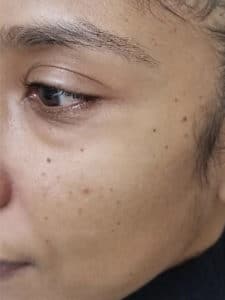
A common condition we treat in our NYC office is Dermatosis Papulosa Nigra (DPN). These are small, brown lesions that frequently appear on the face and neck.
-
Not True Moles: DPN lesions are technically a type of seborrheic keratosis, not melanocytic moles. They tend to run in families.
-
Flexible Treatment: Because DPN lesions are not true moles, we have more options for removal. They can be cauterized, shaved, lasered, or snipped, depending on the size and location.
-
Expert Removal: Dr. Strachan is highly skilled in treating DPN, ensuring that facial beauty mark removal is performed safely with minimal risk of scarring or pigmentation changes.
The Cost of Mole Removal
One of the most frequent questions we hear is, "How much does it cost to remove moles?" The answer depends on whether the procedure is medical or cosmetic.
Insurance vs. Out-of-Pocket
-
Medical: If a mole is being removed because it is suspicious (e.g., potential dysplastic nevus or melanoma) or symptomatic (painful/bleeding), the procedure is often covered by health insurance, subject to your plan's deductible and copays.
-
Cosmetic: Procedures performed solely for appearance are considered elective. For example, patients inquiring about beauty spot removal cost should expect this to be an out-of-pocket expense, as insurance generally does not cover the removal of benign lesions.
We recommend scheduling a consultation to get an accurate estimate. During your visit, we can assess whether the removal is medically necessary or cosmetic and provide a transparent price breakdown.
Frequently Asked Questions About Mole Removal
Does mole removal hurt?
Most patients tolerate mole removal very well.
The procedure is performed using local anesthetic, so you should not feel pain during the removal itself. You may feel a brief pinch or burning sensation when the anesthetic is injected.
After the procedure:
- Mild soreness, tenderness, or a tight feeling is common for a few days
- Over-the-counter pain relievers like acetaminophen are usually sufficient
- Significant pain is uncommon and should be reported
Will I need stitches after mole removal?
It depends on how the mole is removed, which is determined by:
- The size of the mole
- Its depth
- Its location
- Whether it is medically suspicious
In general:
- Shave removals (superficial moles):
- Typically do not require stitches
- Excisional removals (deeper or suspicious moles):
- Do require stitches to ensure proper healing and optimal scarring
Your dermatologist will discuss the planned technique before the procedure.
How long is the recovery time after mole removal?
Recovery time varies based on the removal method and location:
- Shave removal:
- Initial healing: ~7–14 days
- Pink or dark spot may fade over several weeks to months
- Excision with stitches:
- Stitches removed in 5–14 days (depending on location)
- Full scar maturation takes several months
Most patients return to normal activities immediately, with simple wound care instructions.
Will mole removal leave a scar?
Any procedure that breaks the skin can leave a scar, but dermatologic techniques are designed to minimize scarring.
Scarring depends on:
- Removal method (shave vs excision)
- Mole size and depth
- Location on the body
- Individual healing tendencies
- Skin tone and history of abnormal scarring
Important notes:
- Shave removals often leave a flat mark that fades over time
- Excisional removals leave a linear scar
- People with darker skin tones may be more prone to post-inflammatory hyperpigmentation or keloids, which your dermatologist will factor into treatment planning
Proper aftercare significantly improves cosmetic outcomes.
What can I do to reduce scarring after mole removal?
To optimize healing:
- Follow wound care instructions exactly
- Keep the area clean and moisturized
- Avoid picking or scratching
- Use sun protection once healed
- Silicone gel or sheets may be recommended in some cases
Your dermatologist may also recommend scar treatments if needed.
Can I use a laser to remove moles at home?
No. You should never use a home mole removal laser or "plasma pen" on a mole. These devices burn the skin, which can cause severe scarring and infection. More importantly, they destroy the tissue, meaning you could burn off a melanoma without knowing it, delaying life-saving treatment. Always see a professional doctor to remove moles.
Who removes moles on the face?
Both dermatologists and plastic surgeons perform these procedures. However, a board-certified dermatologist is uniquely trained to diagnose the lesion first. Dr. Strachan is experienced in surgical facial mole removal, ensuring that the incision is as discreet as possible while verifying the skin's health.
How do you treat moles on eyelids?
Moles on eyelids removal requires precision. Depending on whether the spot is a true mole or a seborrheic keratosis, we will choose the safest method (shave, snip, or excision) to protect your eye and eyelid function.
Does mole removal leave a scar?
Any procedure that breaks the skin will leave some mark, but skilled removal aims to make it barely visible. For raised mole removal on the face, a shave removal often heals as a small, flat white mark that fades over time. Surgical excision results in a fine line scar. We provide detailed aftercare instructions to help optimize healing.
Schedule Your Consultation in NYC
Whether you are worried about a changing mole or interested in removing flat moles for cosmetic reasons, Dr. Dina D. Strachan is here to help. Click here to schedule your consultation