

Dermatologist Recommended Dandruff Shampoo: How to Choose the Best Anti-Dandruff Shampoo for Dry, Itchy Scalp
Dandruff may seem simple, but it often is not. What many people call “dandruff” is often part of a broader condition called seborrheic dermatitis, a chronic, inflammatory rash that commonly affects oily areas like the scalp, face, ears, and chest. It can flare seasonally, especially in winter and early spring, and it may need more than just a random shampoo from the drugstore to get under control.
If you are looking for a dermatologist recommended dandruff shampoo, the best choice depends on your scalp, hair texture, how often you wash, and whether you are dealing with simple flaking or true seborrheic dermatitis. The right shampoo can reduce scaling, itching, and irritation without over-drying your hair.
Important Disclaimer
This content is for educational purposes only and is not medical advice. Some links on this page may be affiliate links, which means we may earn a commission if you purchase through them. That does not change which products our board-certified dermatologist recommends. The best product for you depends on your scalp, hair texture, symptoms, and medical history.
Shop: Dandruff shampoo here!
What Is Dandruff?
Dandruff is the milder end of the seborrheic dermatitis spectrum. It usually shows up as flakes, itching, and scalp irritation. Seborrheic dermatitis is the broader medical condition and can involve more redness, inflammation, and greasy or stuck-on scale. It can appear not only on the scalp, but also on the eyebrows, eyelids, ears, sides of the nose, beard area, chest, and other oily or hair-bearing areas of the body.
In people with more body hair, seborrheic dermatitis can also affect areas such as the chest, back, underarms, and groin folds. When it affects the scalp, some people notice loose flakes in the hair, while others notice more scaling directly on the scalp.
Dandruff vs. Seborrheic Dermatitis
Dandruff
Usually means:
- Flaking on the scalp
- Mild itch
- Minimal redness
Seborrheic Dermatitis
Seborrheic dermatitis may include:
- More obvious inflammation
- Itching or burning
- Yellow, white, or greasy scale
- Involvement of the scalp, face, ears, chest, and other oily areas
In practical terms, dandruff is often the consumer term, while seborrheic dermatitis is the medical diagnosis when the condition is more persistent, more inflamed, or present beyond the scalp.

Why a Dermatologist Recommended Dandruff Shampoo Matters
Not every flaky scalp is dandruff. Some conditions can look similar but need very different treatment, including:
- Psoriasis
- Eczema
- Contact dermatitis
- Tinea capitis (fungal scalp infection)
If your scalp is not improving with over-the-counter shampoo, or if you have significant redness, pain, crusting, patchy hair loss, or swollen lymph nodes, it is time to see a board-certified dermatologist.
The Best Dermatologist Recommended Dandruff Shampoo Ingredients to Look For
The American Academy of Dermatology recommends looking for dandruff shampoos with active ingredients such as zinc pyrithione, sulfur, selenium sulfide, ketoconazole, salicylic acid, and coal tar. Different ingredients help in different ways, so sometimes rotating shampoos works better than relying on just one. (American Academy of Dermatology)
1. Zinc Pyrithione
Zinc pyrithione is a classic anti-dandruff ingredient. It helps reduce flaking and yeast overgrowth and is often a good starting point for mild to moderate dandruff.
Best for:
- Mild dandruff
- Itchy scalp
- Maintenance use
2. Selenium Sulfide
Selenium sulfide helps reduce flaking and can be especially helpful when scale is more persistent.
Best for:
- More obvious flaking
- Greasy scale
- Scalp buildup
3. Ketoconazole
Ketoconazole is one of the best-known anti-dandruff ingredients and is the active ingredient in products like Nizoral. It targets yeast that plays a role in seborrheic dermatitis. There is both an over-the-counter and prescription strength.
Best for:
- Seborrheic dermatitis
- Recurrent dandruff
- Itchy, inflamed scalp
4. Sulfur
Sulfur can help loosen scale and reduce buildup. It is sometimes overlooked, but it can be useful in people with thicker scale. Although very effective, some people, however, object to the smell.
Best for:
- Scalp scaling
- Combination regimens
- Stubborn flakes
5. Salicylic Acid
Salicylic acid helps lift and loosen scale. A beta hydroxy acid, salicylic acid also has an antiinflammatory effect. It can be useful, but on its own it may be too drying for some people. It is not the best choice for people with curly or kinky hair texture as their hair tends to be drier. People with straight hair that tends to be oily may better tolerate this option.
Best for:
- Thick scalp scale
- Product buildup
- People who tolerate more frequent shampooing
6. Tea Tree Oil
For those who prefer a more natural approach there is solid clinical evidence for tea tree oil. It contains a compound called terpinen-4-ol, which has been shown to kill Malassezia, the yeast-like fungus that causes most dandruff. Don’t apply 100% tea tree oil to the scalp, however, as it can cause irritant contact dermatitis.
7. Neem
Neem has been used in Ayurvedic medicine for centuries, and modern science is catching up. It contains nimbin and azadirachtin, which are both antifungal and anti-inflammatory. It’s great for very inflammed scalps. May be drying.
Dermatologist Recommended Shampoo for Dry, Itchy Scalp: What to Keep in Mind
A good shampoo for dry, itchy scalp should treat the scalp without stripping the hair so aggressively that the hair becomes brittle, rough, or hard to manage.
That matters even more for:
- Curly hair
- Coily hair
- Kinky hair
- Chemically treated hair
- Color-treated hair
Textured hair often needs a different strategy. The scalp still needs cleansing and treatment, but the hair shaft itself is more vulnerable to dryness. For many patients, the goal is to control the scalp while preserving moisture and manageability in the hair.

Seborrheic Dermatitis in Black Patients and Textured Hair
Seborrheic dermatitis may be more common in Black people in some studies, with one review citing a prevalence difference of 6.5% in Black patients versus 1.8% in White patients. Clinical presentation can also differ, with more visible scalp scale rather than simply loose flakes in the hair. (PMC)
This is one reason shampoo advice has to be realistic. In patients with textured hair, it is not always practical or desirable to wash daily. A treatment plan has to account for:
- Hair texture
- Hairstyle
- Scalp oil
- Hair fragility
- How often the person can comfortably shampoo
A review on seborrheic dermatitis in skin of color notes that hair washing frequency may be lower in Black women depending on hairstyle, which makes one-size-fits-all shampoo instructions less useful. (PMC)
How Often Should You Wash With Dandruff Shampoo?
In general:
- At least once weekly is a reasonable minimum for many people with dandruff or seborrheic dermatitis
- If your hair and scalp tolerate it, 2 to 3 times a week may work better
- Some oilier scalps do well with even more frequent washing
- Some textured hair types do better with a carefully chosen weekly regimen plus scalp treatments in between
The best schedule depends on your scalp, hair type, workout frequency, climate, and styling routine.
Seasonal Flares Are Common
Seborrheic dermatitis often gets worse in colder weather and tends to flare more in winter and early spring. Some studies also show increased frequency in autumn and winter.
That means a shampoo that was “good enough” in summer may not be enough during cooler, drier months.
How to Use Anti-Dandruff Shampoo Correctly
Many people are not failing treatment. They are just not using the shampoo long enough on the scalp.
For best results:
- Apply the shampoo to the scalp, not just the hair
- Lather thoroughly
- Let it sit for several minutes if the label says to do so
- Rinse well
- Follow with a moisturizing conditioner on the hair lengths if needed
When Over-the-Counter Shampoo Is Not Enough
Sometimes OTC shampoos are not strong enough. If you are still itchy, flaky, inflamed, or uncomfortable, a board-certified dermatologist may prescribe:
- Prescription-strength ketoconazole shampoo
- Topical steroid solutions, foams, or oils
- Non-steroid anti-inflammatory scalp treatments
- Combination regimens for scalp and face
This is especially important if you are also noticing hair shedding, scalp tenderness, or thick scale.
My Approach to Choosing a Dermatologist Recommended Dandruff Shampoo
When I recommend a dandruff shampoo, I look at:
- Whether it is true dandruff or seborrheic dermatitis
- How inflamed the scalp is
- Whether the issue is loose flakes or scalp scale
- Hair texture and wash frequency
- How drying the shampoo is likely to be
- Whether the patient may need prescription treatment instead
The best shampoo is not always the strongest one. It is the one the patient can actually use consistently and that treats the scalp without creating a new problem with dryness or breakage.
Dermatologist Recommended Dandruff Shampoo Picks
Shop all of our shampoos for dandruff on our storefront. Here are some of our recommendations here:
Best for Mild Dandruff
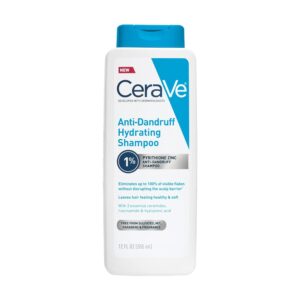
Cerave Anti-dandruff Hydrating Shampoo
- 1% zinc pyrithione
- hydrating forumulation safe of all hair textures
Best for Itchy Scalp
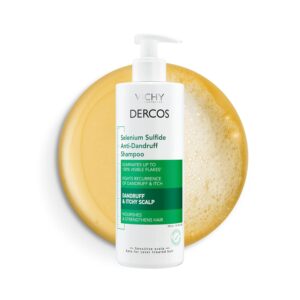
- Most popular brand in Europe
- selenium sulfide comparable to prescription strength ketoconazole
Best Ketoconazole Shampoo
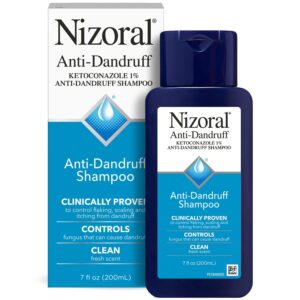
- This 1% ketoconazole shampoo is a best seller
Best for Textured Hair
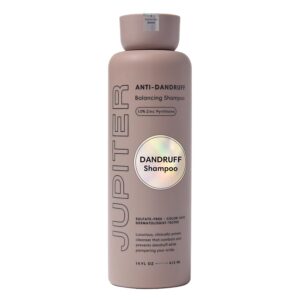
- 1% Zinc Pyrithione
- With coconut oil and squalene it’s great for all hair but especially textured hair types that tend to get dry
- color and chemically-treated hair safe
Best for Scalp Scale and Build-Up
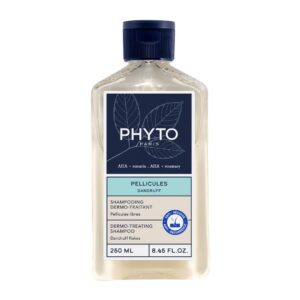
Phyto Scalp Solutions Dandruff Shampoo
- contains lactic and salicyclic acids to exfoliate and remove scale from hair and scalp
- May be drying for some hair types
FAQ: Dermatologist Recommended Dandruff Shampoo
What is the best dermatologist recommended dandruff shampoo?
The best dandruff shampoo depends on what is causing the flaking. Shampoos with ketoconazole, zinc pyrithione, selenium sulfide, sulfur, or salicylic acid can all help. The right choice depends on how oily, dry, itchy, or inflamed your scalp is.
Is dandruff the same as seborrheic dermatitis?
Dandruff is generally considered the milder end of seborrheic dermatitis. Seborrheic dermatitis is the broader medical condition and may also affect the face, ears, chest, and other oily areas.
Can dandruff shampoo help scaling on the face or ears?
Sometimes, but you should be careful. The scalp and facial skin are different. If you have scaling on the eyebrows, around the nose, ears, or beard area, you may have seborrheic dermatitis and need a treatment designed for those areas. Make an appointment with a board-certified dermatologist.
How often should I use anti-dandruff shampoo?
Many people do well with once weekly to several times per week, depending on scalp oil, hair texture, and the product used. Textured hair often requires a more customized schedule.
Why is my dandruff not getting better?
You may have a condition that looks like dandruff but is not. Psoriasis, eczema, contact dermatitis, and fungal infection can all mimic dandruff. You may also need prescription treatment.
When to See a Board-Certified Dermatologist
- Over-the-counter dandruff shampoo is not helping
- You have significant redness or itching
- You have scalp pain or tenderness
- You are losing hair
- You have rash on the face, ears, or chest
- You are not sure whether it is really dandruff
A flaky scalp is not always “just dandruff.” A proper diagnosis matters.