
Central Centrifugal Cicatricial Alopecia (CCCA) – Causes, Symptoms & Treatment
Certain forms of hair loss require specialized evaluation and care. At Aglow Dermatology in New York City, Dr. Dina M. Strachan, MD, a board-certified dermatologist, treats a variety of hair and scalp disorders, including conditions that cause permanent hair loss such as central centrifugal cicatricial alopecia.
What is Central Centrifugal Cicatricial Alopecia (CCCA)?
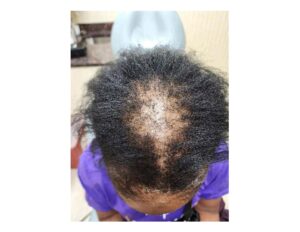
Central centrifugal cicatricial alopecia (CCCA) is a progressive scarring hair loss condition that primarily affects Black women. It typically starts at the crown of the scalp and spreads outward in a circular pattern, leading to permanent hair loss due to scarring and destruction of hair follicles. Early diagnosis and treatment are crucial to slowing its progression.
Who is Most Commonly Affected?
-
Black Women: The condition is most prevalent in women of African descent, typically appearing in their 30s and 40s.
-
People with a Family History: A genetic predisposition may play a role.
-
Susceptible Individuals with a History of Certain Hair Grooming Practices: Excessive heat, chemical treatments, and heavy or tight hairstyles may contribute. People with a history of uterine fibroids and keloids are more commonly affected as are diabetics. It is often seen in the setting of traction alopecia.
What are the Symptoms and Signs?
-
Gradual hair thinning that starts at the crown and spreads outward.
-
Scalp tenderness, itching, or burning, particularly in the affected area. Many, however, report no symptoms
-
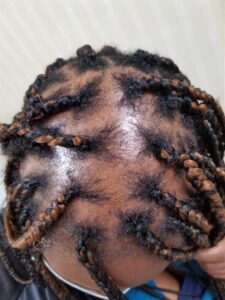
Scarring and inflammation, which may lead to shiny, smooth areas on the scalp.
-
Permanent hair loss if left untreated.
Check out this CCCA before and after!
What Causes CCCA?
-
Inflammation and Scarring: The immune system mistakenly attacks hair follicles, leading to permanent damage.
-
Genetics: A family history of CCCA increases the likelihood of developing the condition.
-
Hair Care Practices: Frequent use of relaxers, hot combs, weaves, and tight braids may trigger or worsen CCCA.
-
Underlying Health Conditions: Some studies suggest a link between CCCA and metabolic disorders such as diabetes.
How is it Diagnosed?
-
Clinical Examination: A dermatologist takes a medical history and evaluates scalp health, hair thinning patterns, and symptoms.
-
Scalp Biopsy: A small tissue sample may be taken to confirm scarring and inflammation.
-
Trichoscopy: A non-invasive tool to assess hair follicle damage under magnification.
What are the Treatment Options?
Anti-Inflammatory Medications:
-
Topical or Intralesional Corticosteroids: Reduce scalp inflammation and slow progression.
-
Oral Tetracycline Antibiotics: Help control inflammation and prevent further damage.
-
Oral Metformin: Reduces scar formation and inflammation
Topical Treatments:
-
Minoxidil (Rogaine): May help promote hair regrowth in areas with active follicles. Oral minoxidil is also an option.
-
Calcineurin Inhibitors (Tacrolimus): Can be used to reduce inflammation.
-
Topical Metformin: Reduces scarring and inflammation
Hair Care Modifications:
-
Avoiding physical trauma such as tight or heavy hairstyles, excessive heat, or irritation.
-
Using gentle shampoos and moisturizing scalp treatments.
Surgical Options (For Advanced Cases):
-
Hair Transplant Surgery: Can be considered if the disease is no longer active.
-
Non-surgical Hair Restoration: Alma TED or PRP
Lifestyle and Health Management:
-
Maintaining a balanced diet rich in protein, vitamins and minerals and low in sugar.
-
Managing underlying health conditions such as diabetes.
There is hope! check out the Alma TED hair treatment before and after for CCCA!
Can CCCA Be Reversed or Prevented?
Yes and no. CCCA is not reversible once scarring has occurred, but early intervention can restore function to damaged follicles and prevent further hair loss. Protective hair care practices and anti-inflammatory treatments can help manage the condition and slow its progression.
Frequently Asked Questions (FAQs)
Yes, if scarring has developed, the hair loss is permanent. However, treatment can slow or halt progression.
There is no cure, but treatment can help preserve existing hair and manage symptoms.
While it is most common in Black women, men, and people of other ethnicities can also be affected.
When to See a Dermatologist
If you experience progressive hair thinning at the crown, scalp tenderness, or unexplained hair loss, it’s essential to see a dermatologist as soon as possible. Early diagnosis can help prevent further hair loss and scarring.
Next Steps & How to Get Treatment
If you suspect you have CCCA, schedule an appointment with our hair loss dermatologist to get a personalized treatment plan. Learn more about hair loss conditions and ways to protect your scalp health. Learn about our telehealth for hair loss services!