
Alopecia Areata – Causes, Symptoms & Treatment
Dr. Dina M. Strachan, MD, a board-certified dermatologist at Aglow Dermatology in New York City, evaluates and treats a wide range of hair loss conditions. One condition patients frequently ask about is alopecia areata, a disorder that can cause sudden patchy hair loss.
What is Alopecia Areata?
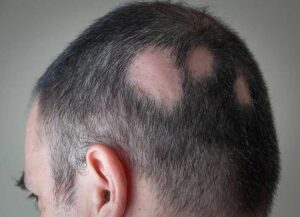
Alopecia areata is an autoimmune condition that causes sudden hair loss in small, round patches on the scalp, face, and sometimes other areas of the body. The immune system mistakenly attacks hair follicles, leading to unpredictable hair shedding. In severe cases, it can progress to alopecia totalis (complete scalp hair loss) or alopecia universalis (total body hair loss). While the condition can affect anyone, it is more common in individuals with a family history of autoimmune diseases.
Who is Most Commonly Affected?
-
Men and Women: Both sexes are equally affected, with onset typically in childhood or early adulthood.
-
Genetic Predisposition: Those with a family history of alopecia areata or other autoimmune disorders (e.g., thyroid disease, vitiligo) are at higher risk.
-
People with dark hair: Alopecia areata is more common in people with naturally dark hair (opens in new tab) vs blonds. Melanin, the dark pigment that darkens skin and hair, may be a trigger.
-
Children and Young Adults: The condition often appears before the age of 30 but can occur at any age.
What are the Symptoms?
-
Sudden round or oval bald patches on the scalp, beard, or eyebrows.
-
Hair loss that occurs in weeks or even overnight.
-
Short, broken hairs around the edges of bald patches, known as “exclamation mark” hairs.
-
In some cases, nail changes such as pitting or ridges.
-
No pain or itching, although some individuals report mild tingling before hair loss occurs.
What Causes Alopecia Areata?
-
Autoimmune Response: The immune system mistakenly attacks hair follicles, disrupting their growth cycle.
-
Genetics: A family history of this condition or other autoimmune disorders increases risk.
-
Environmental Triggers: Stress, infections, or trauma may contribute to onset or flare-ups.
How is it Diagnosed?
-
Clinical Examination: A dermatologist evaluates your history and assesses the scalp and affected areas.
-
Pull Test: Checking the stability of nearby hairs.
-
Trichoscopy: A detailed scalp analysis to identify characteristic hair loss patterns such as exclamation point hairs.
-
Blood Tests: To rule out related autoimmune conditions (e.g., thyroid dysfunction, plasma zinc).
-
Scalp Biopsy (Rare Cases): To confirm autoimmune-related follicle inflammation.
What are the Alopecia Areata Treatment Options?
Topical Medications:
-
Corticosteroids: Reduce inflammation and suppress immune activity.
-
Minoxidil (Rogaine): Can help stimulate regrowth.
-
Squaric acid
Injections:
-
Corticosteroid Injections: Directly into affected areas to promote regrowth.
Oral Medications:
-
JAK Inhibitors (Tofacitinib, Baricitinib): Newer treatments that block immune system overactivity.
-
Prednisone: Oral steroids have a role in acute flare-ups of alopecia areata.
-
Metformin: There is some evidence that this diabetes drug may be effective in reversing alopecia areata.
-
Apremilast (opens in new tab): Modest evidence shows some efficacy in some patients. This may be a good option when immunosuppression is not an option.
-
Minoxidil
Light Therapy (Phototherapy):
-
Uses UV light to reduce autoimmune response.
-
Red light therapy
Lifestyle & Supportive Care:
-
Wigs, hats, and cosmetic solutions.
-
Stress management techniques to prevent flare-ups.
Supplements
-
Studies show that zinc deficiency may be associated with this condition.
Can Alopecia Areata Be Reversed or Prevented?
Hair regrowth is possible, but the condition is unpredictable. Some individuals experience spontaneous regrowth, while others have recurring episodes of hair loss. Early intervention with medical treatments can improve outcomes. Since triggers like stress and inflammation may contribute, managing overall health can help reduce severity.
Frequently Asked Questions (FAQs)
No, it is an autoimmune condition, not an infection.
It is an autoimmune disease. It is possible that severe stress may be a trigger.
Regrowth varies; some individuals experience full recovery, while others may have persistent hair loss.
It may remain localized or progress to larger areas over time.
A board-certified dermatologist is the best option to treat this condition.
When to See a Dermatologist
If you notice sudden patchy hair loss, seek medical evaluation. A dermatologist can confirm the diagnosis and recommend effective treatment options to help manage hair regrowth.
Next Steps & How to Get Treatment
Alopecia areata is manageable with the right approach. Schedule a consultation with our hair loss dermatologist to explore treatment options and create a personalized care plan. Learn more about other causes of hair loss and available solutions. Learn about our telehealth for hair loss services!