

Skin Biopsy NYC | Shave, Punch & Excisional Biopsy
A skin biopsy is a quick procedure in which a dermatologist removes a small sample of skin so it can be examined under a microscope. A skin biopsy can help diagnose skin cancer, suspicious moles and growths, rashes, infections, inflammatory skin conditions, hair loss, and other skin disorders that cannot always be diagnosed by appearance alone.
At Aglow Dermatology in New York City, board-certified dermatologist Dr. Dina Strachan performs skin biopsies when microscopic examination of the skin may help establish or confirm a diagnosis and guide treatment.
If you have a new or changing growth, an unexplained rash, or another skin problem that may require a biopsy, schedule an evaluation with Aglow Dermatology.
[Schedule a Dermatology Appointment]
What Is a Skin Biopsy?
A skin biopsy is a diagnostic procedure that removes a small amount of skin or a skin lesion for examination by a pathologist. The sample is typically examined under a microscope for changes that can help identify the cause of a skin problem.
Having a skin biopsy does not mean that you have cancer. Dermatologists use biopsies to diagnose many different skin conditions.
Depending on what your dermatologist is evaluating, a skin biopsy may be used to help diagnose:
- Suspicious moles and other skin growths
- Basal cell carcinoma
- Squamous cell carcinoma
- Melanoma
- Persistent or unexplained rashes
- Eczema and other inflammatory skin diseases
- Psoriasis
- Autoimmune and connective-tissue diseases affecting the skin
- Bacterial or fungal infections
- Blistering skin diseases
- Hair and scalp disorders
- Scarring forms of hair loss
The appropriate biopsy technique depends on the suspected diagnosis, the depth of tissue needed, and the size and location of the area being sampled.
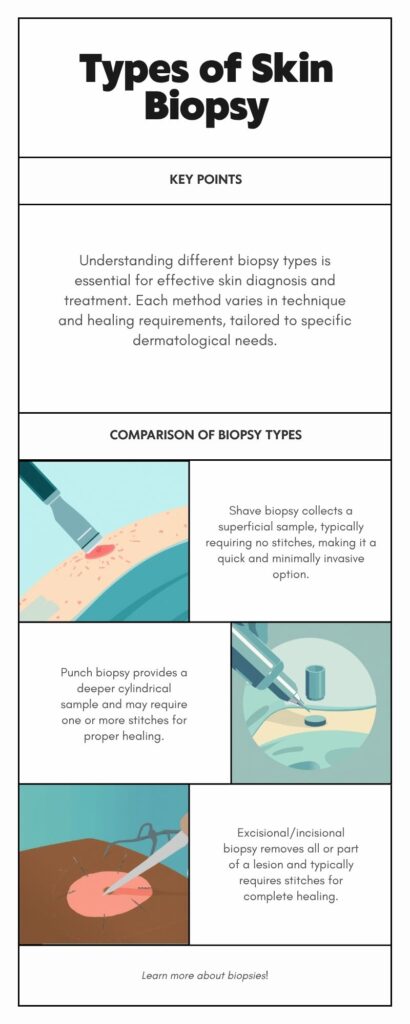
Types of Skin Biopsy
Common skin biopsy techniques include shave biopsy, punch biopsy, and incisional or excisional biopsy.
Shave Biopsy
A shave biopsy removes a superficial portion of a skin lesion using a specialized blade, razor, or scalpel.
Because a shave biopsy generally samples the upper layers of skin, it can be useful for evaluating many raised or superficial lesions. The depth of a shave can vary depending on what needs to be sampled.
Shave biopsies generally do not require stitches.
Punch Biopsy
A punch biopsy uses a small circular cutting instrument to remove a cylindrical sample that includes deeper layers of the skin.
Punch biopsies are particularly useful when the dermatologist needs to evaluate the architecture or depth of a skin condition. They are commonly used in the evaluation of inflammatory rashes and other disorders in which a deeper sample can provide important diagnostic information.
Depending on the size and location of the punch biopsy, one or more stitches may be required.
Punch biopsies may also be performed on the scalp when evaluating certain forms of hair loss.
[Learn more about scalp biopsy for hair loss →]
Excisional Biopsy
An excisional biopsy removes an entire lesion rather than sampling only a portion of it.
The dermatologist typically uses a scalpel to remove the lesion, often along with an appropriate margin of surrounding tissue. Because the incision extends through deeper layers of the skin, stitches are generally required.
An excisional biopsy may be recommended when removing the entire lesion provides the most useful specimen for diagnosis.
Incisional or Scalpel Biopsy
Patients may sometimes hear the term “scalpel biopsy.” A scalpel is a surgical instrument that can be used to perform an incisional or excisional skin biopsy.
With an incisional biopsy, only a portion of a larger lesion is removed for examination. With an excisional biopsy, the entire visible lesion is removed.
Your dermatologist determines the appropriate technique based on the type of lesion, its location and size, and the information needed from the pathology examination.
What Happens During a Skin Biopsy?
Most skin biopsies can be performed during an office visit.
First, the biopsy site is cleaned. A local anesthetic is injected to numb the area. You may briefly feel the injection, but once the area is numb, the biopsy itself should not be painful.
Dr. Strachan then removes the appropriate skin sample using the biopsy technique selected for your condition.
Depending on the type, size, and location of the biopsy, the site may be allowed to heal naturally or may be closed with one or more stitches. When stitches are required, they are typically left in place for approximately 5 to 14 days, depending on the location of the biopsy and how the area is healing.
The specimen is then sent to a pathology laboratory for microscopic examination, and you will receive instructions for caring for the biopsy site while it heals.
Skin Biopsy Aftercare
Proper wound care can help the biopsy site heal and reduce the risk of infection and unnecessary scarring.
Your exact instructions will depend on the type and location of your biopsy. In general, patients may be instructed to keep the area clean, apply petroleum jelly or another recommended wound-care product, and keep the site covered while it heals.
If stitches are placed, suture removal is usually scheduled approximately 5 to 14 days after the biopsy, depending on the location of the wound. Follow the specific instructions provided by your dermatologist.
Contact the office if you develop concerning symptoms such as persistent bleeding, increasing redness or swelling, drainage, or worsening pain.
Frequently Asked Questions About Skin Biopsy
Does a skin biopsy hurt?
The area is numbed with a local anesthetic before the biopsy. The anesthetic injection may briefly sting or burn. Once the area is numb, you should not feel the cutting involved in the biopsy, although you may feel pressure or movement.
How long does a skin biopsy take?
A skin biopsy is generally a short office procedure. The total appointment also includes examining the lesion, discussing the procedure, numbing and preparing the skin, controlling any bleeding, dressing the wound, and reviewing aftercare instructions.
Do skin biopsies require stitches?
Not always. Shave biopsies usually do not require stitches. Punch biopsies may require one or more stitches depending on their size and location. Excisional and incisional biopsies generally require sutures.
How long do stitches stay in after a skin biopsy?
When stitches are needed after a skin biopsy, they are generally removed about 5 to 14 days later. The timing depends primarily on the location of the biopsy and how the wound is healing. Your dermatologist will tell you when your stitches should be removed.
Does a skin biopsy leave a scar?
Any procedure that removes skin can potentially leave a scar. The appearance of the scar depends on factors including the biopsy technique, depth and size of the sample, biopsy location, wound healing, and an individual’s tendency to scar.
How long does a skin biopsy take to heal?
Healing time varies depending on the biopsy technique, size and depth of the wound, its location, and individual healing factors. Superficial biopsy sites may heal relatively quickly, while deeper biopsies and certain locations can take longer.
Following your dermatologist’s wound-care instructions can help support proper healing.
How long do skin biopsy results take?
The time required for skin biopsy results varies typically take one week. Some specimens can be interpreted relatively quickly, while others require additional stains, testing, or specialist review.
Aglow Dermatology will let you know how and when to expect your results.
Can a skin biopsy diagnose skin cancer?
Yes. Examination of biopsied tissue under a microscope is used to diagnose skin cancers including basal cell carcinoma, squamous cell carcinoma, and melanoma.
Can a skin biopsy diagnose a rash?
Yes. A skin biopsy can help diagnose certain inflammatory, infectious, autoimmune, and other skin disorders. Not every rash requires a biopsy; your dermatologist determines whether a biopsy is likely to provide useful information.
What is the difference between a shave biopsy and a punch biopsy?
A shave biopsy removes a superficial portion of skin with a blade, while a punch biopsy uses a circular instrument to obtain a deeper cylindrical sample. Which technique is appropriate depends on the lesion and the diagnosis being considered.
What is the difference between a punch biopsy and an excisional biopsy?
A punch biopsy removes a small circular sample of skin. An excisional biopsy uses a scalpel to remove an entire lesion and is generally closed with stitches.
Is a skin biopsy the same as removing a mole?
Not necessarily. A biopsy is performed to obtain tissue for diagnosis. Sometimes an entire mole or lesion is removed during the biopsy, while in other cases only a representative portion is sampled.
Do I need a dermatologist for a skin biopsy?
Skin biopsies are a fundamental part of dermatologic diagnosis. A dermatologist has specialized training in evaluating skin, hair, and nail disorders and in selecting the biopsy site and technique most appropriate for the suspected condition.
Schedule a Skin Biopsy in NYC
If you have a suspicious mole, changing skin growth, persistent rash, unexplained skin condition, or another concern that may require a skin biopsy, schedule an appointment with Dr. Dina Strachan at Aglow Dermatology in New York City.
Dr. Strachan is a board-certified dermatologist with more than 25 years of experience diagnosing and treating medical dermatologic conditions.
Your visit begins with a dermatologic examination. If a biopsy is appropriate, Dr. Strachan will determine the biopsy technique most likely to provide the information needed to establish a diagnosis and guide your treatment.
Schedule your skin biopsy evaluation with Aglow Dermatology today.