

Dermatologist Recommended Products for Brittle Hair
The best dry hair treatments, hydrating masks, and heat-damaged hair repair products — curated by a board-certified dermatologist.
Medical disclaimer: This page is for educational purposes only and is not a substitute for medical advice. If you’re experiencing significant hair loss, scalp issues, or sudden changes in hair quality, please consult a board-certified dermatologist.
Transparency note: This page contains affiliate links. If you buy through them, Aglow Dermatology may earn a small commission at no extra cost to you — it helps keep our educational content free. I only recommend products I’d suggest to my own patients, several of which are from Phyto — a brand whose botanical formulations consistently align with what I look for in dry and brittle hair care, not because of any brand relationship.
Quick Summary
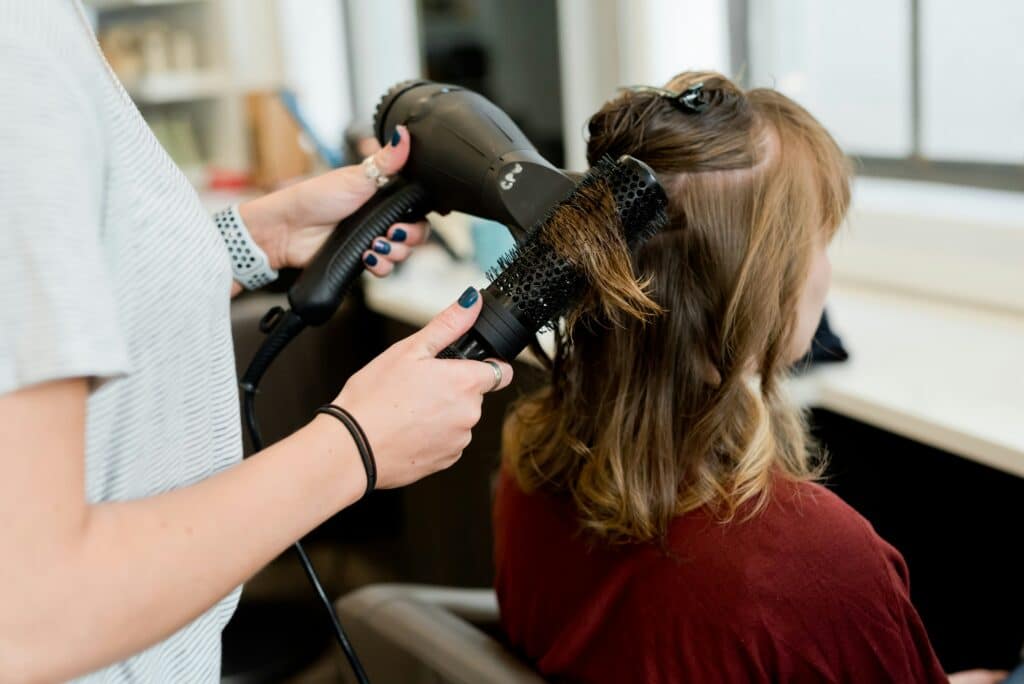
If your hair snaps when you comb or brush it, feels like straw, or has lost its bounce, you’re dealing with brittle hair — usually a mix of dryness and damage. The most effective approach is rooted in hydration: restoring moisture to the hair shaft, sealing the cuticle, and protecting new growth going forward. For hair that is severely damaged, trimming is not optional — no product can repair a strand that has structurally failed. Below, I’ve curated the products I actually trust, organized by category so you can build a routine that works for your hair.
What Is Brittle Hair?
Brittle hair is hair that has lost its tensile strength and elasticity, so it snaps or breaks easily instead of stretching. Under a microscope, brittle hair shows a damaged cuticle — the protective outer layer of the strand is lifted, cracked, or missing entirely, exposing the inner cortex where the protein bonds that give hair its strength live.
Brittle hair is almost always also dry hair: when the cuticle is damaged, moisture escapes and can’t be retained. That’s why the most effective treatments don’t just add moisture on top — they help seal the cuticle so your hair can hold moisture again.
Signs Your Hair Is Brittle, Dry, or Heat-Damaged
- Hair snaps off when you brush, comb, or style it
- Ends feel rough, straw-like, or look frayed
- Mid-shaft breakage (short, broken hairs around your hairline or part)
- Split ends — strands that fray and divide at the tip (clinically: trichoptilosis)
- Hair feels gummy or stretchy when wet — a sign of severe moisture imbalance
- Color won’t hold, or fades unevenly
- Loss of shine, especially mid-shaft to ends
- Increased tangling and “Velcro” texture
- For curly and kinky hair: hair that seems to never grow past a certain length — usually a sign of ongoing breakage at the ends, not a growth problem
What Causes Brittle and Dry Hair?
Most cases of brittle hair come from a stacked combination of these — not a single culprit:
1. Heat Styling
Flat irons, curling wands, and blow dryers used above 365°F denature the keratin proteins in your hair.
2. Chemical Processing
Bleach, permanent color, relaxers, perms, and keratin treatments all break the disulfide bonds that hold your hair’s structure together. Bleach is the most aggressive — it can cut the cortex’s bonds by 30–50% in a single session.
3. Mechanical Damage
Tight ponytails, traction from extensions, rough towel-drying, brushing wet hair, and sleeping on cotton pillowcases all create friction that lifts and cracks the cuticle.

4. Environmental Stress
UV exposure degrades hair keratin the same way it ages skin. Chlorine, salt water, and hard water (high in calcium and magnesium) all dehydrate the strand and leave mineral deposits that worsen brittleness.
5. Hypothyroidism
Hypothyroidism is the most common internal medical cause of brittle hair. It produces dry, coarse, brittle hair along with diffuse shedding. If your hair has changed in texture or thickness and you also have fatigue, weight changes, cold intolerance, or constipation, ask your physician for thyroid labs (TSH at minimum).
6. Hair-Shaft Disorders
Several genetic and acquired conditions cause brittle hair that breaks easily. The most common acquired one is trichorrhexis nodosa — in straight hair, this typically presents as split ends and fraying at the tips; in curly and kinky hair, it often shows up as breakage at a consistent length, which patients describe as their hair “not growing” past a certain point. These conditions are diagnosed under microscopy by a dermatologist, and the treatment approach differs from cosmetic damage. If your hair breaks at the same length no matter how careful you are, schedule a dermatology visit.
7. Hormonal Shifts
Postpartum hormonal changes, perimenopause, menopause, and PCOS all alter the hair growth cycle and the quality of newly grown strands. Hair may become finer, drier, and more breakage-prone during these transitions. A dermatologist can help distinguish hormonal shifts from other treatable causes.
8. Over-Washing (or Under-Washing)
Washing daily with a harsh sulfate shampoo strips the scalp’s natural sebum, which is your hair’s built-in conditioner. But going too long between washes lets product buildup, sweat, and oxidized oil accumulate, which can also weaken strands.
A note on iron, zinc, vitamin D, and biotin: Deficiencies in these primarily cause hair shedding — not brittle shafts. The nutritional causes of true shaft brittleness are uncommon in developed countries. If your hair is shedding alongside breakage, ask your physician for a CBC, ferritin, TSH, and vitamin D — but don’t assume a supplement will fix damage from heat, chemicals, or mechanical stress.

Why Curly and Kinky Hair Is Naturally More Prone to Brittleness
Curly, coily, and kinky hair — what dermatologists classify as Type 3 and Type 4 hair — is structurally more vulnerable to dryness and breakage than straight or wavy hair. This is anatomy, well-documented in the peer-reviewed dermatology literature, not a matter of styling habits.
The hair follicle is curved, producing a strand with an elliptical cross-section and a spiraling shaft. Every twist along that spiral is a mechanical weak point. Natural scalp oils can’t travel down the coil the way they can on straight hair, leaving mid-shaft and ends chronically dry. Coiled strands also tangle around themselves, forming microscopic single-strand knots that snap during detangling.
A key clinical point: patients with curly and kinky hair often feel their hair “won’t grow past a certain length.” In most cases, it is growing — but it’s also breaking at the ends at roughly the same rate, so length never accumulates. The answer is addressing breakage through consistent moisture, protective styling, and trimming damaged ends — not searching for a growth product.
Effective care for Type 3–4 hair: deeper conditioning, less frequent washing, oil sealing at the ends, satin or silk protection at night, and gentler detangling are non-negotiable.
Want a full deep dive? Read: Kinky Hair: The Whys and Hows of Its Care
When Trimming Is the Real Treatment
This is one of the most important — and most overlooked — parts of brittle hair care. No product can repair a strand that has structurally failed. Once hair is split, severely frayed, or so damaged that it snaps under light tension, the damage at that point on the shaft is permanent. Conditioners and masks will temporarily coat and smooth it, but the underlying structure cannot be restored.
The right move is to trim that hair off and focus your care routine on protecting the new growth coming in — keeping it well-hydrated, shielded from heat and mechanical stress, and sealed with a good leave-in or oil. Trimming is not giving up on your hair. It is the treatment.
How often? For most people with brittle or heat-damaged hair, a trim every 8–12 weeks prevents split ends from traveling up the shaft and creating more breakage. For curly and kinky hair experiencing consistent end breakage, trimming more frequently until the damaged portion is gone is often the fastest path to actually retaining length long-term.
What to Look for in Products for Brittle Hair
When I’m evaluating a product for brittle, dry, or heat-damaged hair, hydration comes first. Here’s what I look for:
- Hydrating botanicals: jojoba, coconut milk, argan oil
- Humectants: glycerin, panthenol (pro-vitamin B5), hyaluronic acid
- Emollients and ceramides to rebuild the cuticle’s lipid barrier
- Plant oils with proven penetration: argan, coconut, marula, jojoba
- Sulfate-free or low-sulfate cleansers
- pH-balanced formula (4.5–5.5) to keep the cuticle lying flat
- Heat protection up to 450°F if you use hot tools
- Water-soluble silicones only — heavy build-up silicones block moisture
A Simple Weekly Routine
Straight hair (2–3x per week)
- Shampoo with a gentle sulfate-free shampoo
- Deep condition with a hydrating mask (5–7 min)
- Apply Phyto 7 to damp hair — there is no comparable product for this step
- Style with a heat protectant before tools, then seal ends with a few drops of a lightweight oil — argan or jojoba work well
Curly/Kinky hair (1x per week)
- Shampoo with a gentle sulfate-free shampoo
- Deep condition with a rich mask (10+ min)
- Apply Phyto 7 to wet hair while detangling with a wide-tooth comb — there is no comparable product for this step
- Style — scrunch in a curl cream, seal ends with a few drops of a lightweight oil — argan or jojoba work well
🧴Best Moisturizing Shampoo for Brittle, Dry Hair
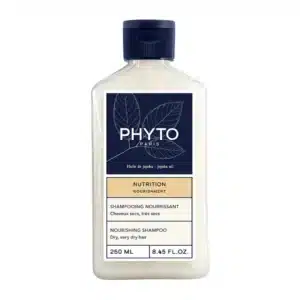
1. Phytojoba Moisturizing Shampoo
Gentle, jojoba-based, sulfate-free formula. Cleanses without stripping. Specifically formulated for dry, brittle hair that needs daily moisture. Apply, lather, rinse — follow with a conditioner or mask.
💧Best Deep Conditioning Masks for Dry, Brittle Hair
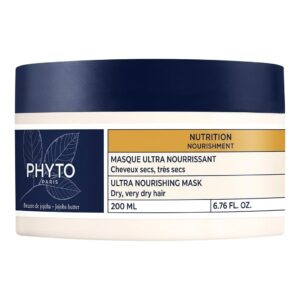
2. PHYTO NOURISHMENT Ultra-nourishing Mask with Jojoba Oil, For Dry Hair, Hydrating, Moisturizing Mask
A rich, plant-based hydrating mask for dry, dehydrated, and textured hair. Apply mid-shaft to ends after shampooing, leave on 5–10 minutes — or even overnight — then rinse thoroughly. Use 1–2 times per week. Good for someone looking for a lighter conditioner.
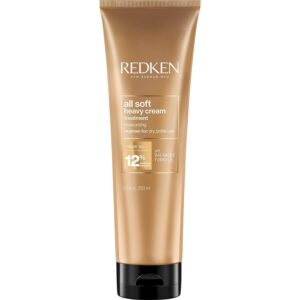
3. Redken All Soft Heavy Cream Mask Treatment
A moisturizing deep conditioner with argan oil that softens and smooths dry, brittle hair. The heavier weight makes it ideal for thick, coarse, or severely heat-damaged hair. Use weekly. Good for thicker, coarser hair.

4. Morrocanoil Intense Hydrating Mask
A well-formulated five-minute mask for medium to thick dry hair. Argan oil and linseed extract nourish the shaft while glycerin and panthenol pull in and hold moisture — a combination that addresses both dryness and brittleness without over-weighting the strand. Good middle-ground option between a standard rinse-out conditioner and a heavier repair mask. Apply mid-shaft to ends on towel-dried hair, leave on 5–7 minutes, rinse. Use once or twice weekly.
⚠️ Contains dimethicone (a non-water-soluble silicone). If you’re using a sulfate-free shampoo, occasional buildup is possible. Clarify monthly or choose a different mask if you’re silicone-sensitive.
🌱Best Daily Leave-In Hydrators for Brittle Hair

5. Phyto 7 Daily Hydrating Botanical Day Cream
This is our dermatologist’s go-to for patients with dry and brittle hair. A leave-in daily moisturizer with seven hydrating botanicals. Apply a small amount daily to dry or damp hair to combat dryness, frizz, and dullness. Lightweight enough for everyday use — no rinsing needed.

6. Pacifica Coconut Milk Hair Detangler Spray
A vegan, coconut-milk-based detangler and leave-in conditioner. Spray on damp hair before brushing to reduce mechanical breakage. An affordable everyday option that adds slip without weighing hair down.
Best Treatment for Curly & Textured Brittle Hair

7. PHYTO Rich Definition Cream Intense Curls
A botanical refresher for curly, coily, and textured hair. Reactivates curl pattern between wash days, adds hydration, and reduces frizz. Apply curls, scrunch, and go. Functions as both a hydrating treatment and a styling product — relevant for curly hair where the two needs often overlap.
Best Anti-Frizz & Smoothing Treatment

8. Phyto Defrisant Anti-Frizz Botanical Hair Treatment
A botanical smoothing serum — not a chemical relaxer despite the name — that controls frizz and adds shine without heavy silicones. Apply a few drops to damp hair before blow-drying, or use on dry hair as a finisher. Not a repair product — but controlling frizz and humidity exposure reduces the daily mechanical stress that worsens brittleness over time.
Best Hair Oil for Brittle, Frizzy Hair

9. Outccogo Moroccan Argan Oil Hair Oil
A lightweight argan-oil-based hair oil for frizzy, dry, and damaged hair. Doubles as a heat protectant. Apply a few drops to mid-shaft and ends before or after styling.
Dr. Strachan’s Pro Tips for Repairing Brittle, Dry, and Heat-Damaged Hair
- Heat-protect every time. Even your blow dryer counts. Spray before any tool touches your hair.
- Drop the temperature. Most fine hair styles beautifully at 300°F. Most coarse hair at 350°F. Skip 400°F+ unless essential.
- Wash less, condition more. Aim for 2–3 washes per week, conditioning every wash, with a weekly deep mask.
- Use lukewarm water. Hot water lifts the cuticle. Finish with a 30-second cool rinse to seal it back down.
- Use wide toothed comb on curly/kinky hair and comb wet.
- Never brush wet hair with a regular brush. Wet hair is at its weakest. Use a wide-tooth comb or a Tangle Teezer.
- Trim every 8–12 weeks. Split ends travel up the shaft. You cannot repair a split end — it must be cut off.
- Skip the tight ponytail. Or at least move it around — the same spot every day creates traction breakage.
- Sleep on silk. The cheapest, most effective overnight treatment for brittle hair.
- Get your thyroid checked. Sudden changes in hair quality often have an internal cause worth ruling out.
- Seal your ends. A drop of argan or jojoba oil on the ends after styling locks in moisture and reduces friction breakage.
FAQ: Brittle Hair, Dry Hair, and Heat-Damaged Hair
How do dermatologists treat brittle hair?
Dermatologists treat brittle hair by first identifying and addressing the underlying cause — whether that’s a nutritional deficiency, a thyroid issue, chemical or heat damage, or a hair-shaft disorder. Treatment typically combines deep hydration (rich masks, leave-ins, sealing oils), gentle sulfate-free shampoos, heat protection, and sometimes oral supplements or prescription treatment if labs show a deficiency. For severely damaged ends, trimming is part of the treatment plan, not a last resort.
What is the best product for brittle, dry hair?
For most people, the most impactful single product is a rich, consistent deep conditioning mask used weekly — combined with a sulfate-free shampoo, a daily leave-in hydrator, and a heat protectant. Hydration is the foundation. Products that market themselves as “bond builders” may offer temporary smoothing, but their effects wash out over time and the independent evidence behind them is more limited than the marketing suggests. Consistent moisture and cuticle sealing have the strongest track record.
Can heat-damaged hair be repaired?
Heat-damaged hair can be significantly improved with hydration and moisture-sealing products, but truly cracked or split strands cannot be permanently restored — they need to be trimmed. The smartest approach is to hydrate and protect what remains, trim what is too far gone, and prevent further damage with consistent heat protectant use and lower tool temperatures going forward.

How long does it take to fix brittle hair?
You should feel a difference after 2–3 uses of a good deep conditioning mask — less breakage during brushing, softer texture. Visible improvement in shine and overall texture usually takes 4–8 weeks of a consistent routine. Because hair grows about half an inch per month, fully growing out damaged sections takes 12–24 months depending on length — which is why trimming damaged ends regularly speeds up the process.
Is brittle hair a sign of a medical problem?
Sometimes, yes. The most common medical cause of brittle, dry, coarse hair is hypothyroidism. Hair-shaft disorders like trichorrhexis nodosa — which shows up as split ends in straight hair and as hair that “won’t grow past a certain length” in curly and kinky hair — also cause brittle hair and require dermatologic diagnosis. Hormonal shifts (postpartum, perimenopause, PCOS) can change hair quality as well. Note: deficiencies in iron, zinc, vitamin D, and biotin primarily cause shedding, not brittle shafts. If your hair changed quickly or you have other symptoms, see a board-certified dermatologist.
Should I use protein or moisture for dry, brittle hair?
Moisture should be the foundation. Protein treatments can temporarily fill gaps along the shaft and reduce porosity, but they don’t permanently repair damage, and too much protein can actually make hair more brittle and snappable. If you use protein treatments at all, keep them infrequent (every 3–4 weeks at most) and always follow with a moisturizing conditioner or mask.
How often should I use a hair mask for brittle hair?
For most patients with brittle, dry hair, once weekly is the sweet spot. Coarser or more severely damaged hair can tolerate twice weekly. If your hair feels limp or over-soft after masking, you’re either using it too often or the formula is too heavy for your hair. Alternate between a lighter hydrating mask and a richer moisturizing treatment for best balance.
Do hair supplements actually work for brittle hair?
For brittle hair caused by heat, chemicals, or mechanical damage, topical hydration works far better than supplements. Most studied hair supplements target shedding and growth — not shaft strength. If your brittle hair is caused by hypothyroidism, correcting the thyroid will help. Otherwise, a consistent routine of deep conditioning, leave-ins, and heat protection is your best investment.
How often should I wash brittle hair?
Most people with brittle, dry hair do best washing 2–3 times per week for straight hair and 1 time a week for kinky/curly hair. Use a gentle, sulfate-free shampoo. Washing daily strips natural oils; washing too rarely lets buildup weaken the strand. Use dry shampoo between washes if needed.
What ingredients should I avoid if I have brittle, dry hair?
Avoid or use sparingly: sodium lauryl sulfate (SLS) and other harsh sulfates, denatured alcohol in leave-in products, and heavy non-water-soluble silicones (high-concentration dimethicone) that build up over time and block moisture from entering the shaft. Always rinse out chlorine and salt water as soon as possible after swimming.
Ready for a Personalized Plan?
The right products go a long way, but if your hair is changing suddenly, shedding, or not improving with a consistent at-home routine, there may be a treatable underlying cause — and you deserve a personalized assessment.
At Aglow Dermatology in New York City, we work with patients on the full picture: scalp health, lab workup, prescription options, and in-office treatments for hair restoration.
Book a consultation here!