
Dermatologist Recommended Hair Growth Caps
Evidence-based guide to the best hair growth caps, hair loss laser hats, and hair regrowth laser devices
Dermatologist-recommended hair growth caps—also known as hair loss laser hats, hair growing caps, or hair laser helmets—have become an increasingly popular, non-drug option for treating hair thinning, especially androgenetic alopecia. These FDA-cleared devices use low-level light therapy (LLLT) to stimulate hair follicles and support regrowth, either on their own or as part of a broader treatment plan. Below, we break down the most popular hair growth caps on the market and help you choose the best option based on your needs, hair type, and goals.

Medical Disclaimer: This content is for educational purposes only and does not replace medical advice. Always consult a qualified physician for diagnosis and treatment.
Affiliate Disclaimer: This is an affiliate page reviewed by a board-certified dermatologist. We may receive compensation if you purchase through links on this page. Recommendations, however, are based on published research, device mechanisms, and clinical relevance
⚠️ Start Here: Get a Diagnosis First
Before investing in any hair growth cap, hair loss helmet, or hair laser helmet, it’s critical to understand why you’re losing hair.
Hair loss can be caused by:
- Androgenetic alopecia (pattern hair loss)
- Central centrifugal cicatricial alopecia (CCCA)
- Telogen effluvium (stress, illness, medications)
- Autoimmune disease (alopecia areata)
- Nutritional deficiencies, thyroid disease, etc.
➡️ These devices are primarily designed for androgenetic alopecia and may not work—or could delay appropriate care—if the diagnosis is incorrect.
➡️ An evaluation with a hair loss dermatologist is strongly recommended before starting treatment.
Where Hair Growth Caps Fit in Hair Loss Treatment
Hair loss treatment is not one-size-fits-all—and hair growth caps (also called hair loss laser hats or hair laser helmets) are just one option within a broader treatment landscape.
Dermatologists typically think about hair loss in tiers of treatment, including:
- Topical therapies (like minoxidil)
- Oral medications (such as finasteride or other anti-androgens)
- Procedural options (PRP, injections, hair transplant)
- Device-based therapies like low-level light therapy (LLLT)
👉 Hair growth caps fall into this last category—a non-drug, device-based approach that can be used:
- Alone (for patients who want to avoid medications)
- Or more commonly, as part of a multimodal treatment plan
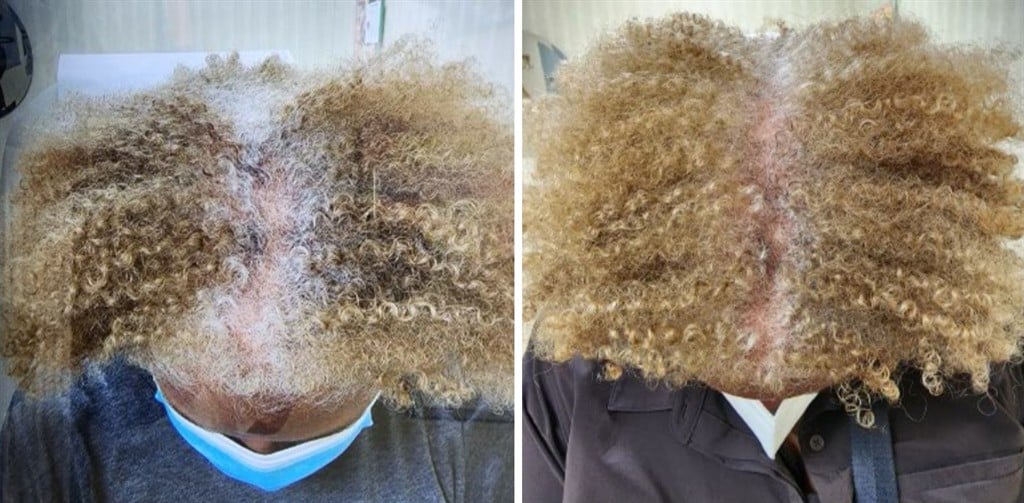
Learn more about the before and after here!
Learn more about menopausal hair loss in women here!
Where They Work Best
These devices are best suited for:
- Chronic hair loss conditions like androgenetic alopecia
- Patients with early to moderate thinning
- Those looking for a maintenance or supportive therapy
Where They May Be Less Helpful
They are less central for:
- Acute shedding (like postpartum telogen effluvium)
- Advanced hair loss with minimal remaining follicles
👉 In those situations, other treatments may be more appropriate—or the investment may not be worthwhile.
🧠 How Hair Growth Caps Work (LLLT / Photobiomodulation)
Most hair growing caps and hair loss laser hats use low-level light therapy (LLLT) within the optical window (~650–950 nm), where light penetrates scalp tissue effectively.
Mechanisms:
- ↑ ATP production (cellular energy via mitochondria)
- ↑ blood flow to follicles
- ↑ anagen (growth phase) duration
- Reactivation of dormant follicles
📚 Example research:
- Avci et al., Lasers in Surgery and Medicine (2014)
- Jimenez et al., American Journal of Clinical Dermatology (2014)
- Lanzafame et al., Lasers in Surgery and Medicine (2013)
A Note on Our Recommendations
As a hair loss specialist, I see patients with a wide range of conditions — including androgenetic alopecia, seborrheic dermatitis, and cicatricial alopecias like CCCA. Most hair growth caps on the market target a single mechanism. The Revian Red stands out because it works through dual wavelengths that address both cellular energy (ATP) and nitric oxide pathways, giving it an anti-inflammatory profile the others lack. For my patients — many of whom have inflammatory scalp conditions alongside hair thinning — that distinction is clinically meaningful. That’s why it receives more attention on this page. The other devices listed are legitimate options and may be better suited depending on your diagnosis, budget, and treatment goals. As always, the right device starts with the right diagnosis.
🥇 Best Hair Growth Caps by Category

🏆 Best Overall / Most Innovative Mechanism
Revian Red — Best for inflammatory hair loss, early AGA, CCCA
- Type: LED (dual wavelength)
- Wavelengths: 620 nm + 660 nm
- Session: 10 min daily
- Price: $$$ ($1,200–$1,500 range depending on promotions)
Why it stands out:
- Targets nitric oxide, not just ATP
- Potential downstream effect on DHT pathways
- Anti-inflammatory profile → relevant for CCCA and sensitive scalps
A quick look at how Revian Red uses dual-wavelength light to support hair growth and scalp health:
📚 Research:
- Clinical Safety and Efficacy of an At-Home, Dual Wavelength Red Light Hair Growth System in Subjects with Androgenetic Alopecia (randomized, double-blind, sham-controlled trial)
- Dual-Wavelength LED Therapy and Dihydrotestosterone (DHT) Inhibition (Revian technical research report)
- Dual-Wavelength LED Mechanism of Action in Hair Growth — Journal of Biophotonics
- Effect of 620 nm and 660 nm Light on Scalp Inflammation and Pruritus (Revian research summary)
Best for:
- Patients with inflammatory scalp conditions
- Women with menopausal hair thinning
- Patients who cannot tolerate medications
👉 Save $450 here with code GROWME!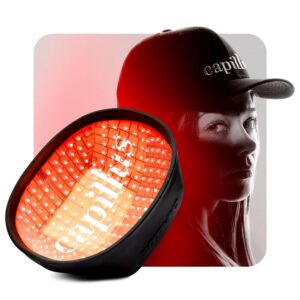
🥼 Best Clinical Laser Technology (Shortest Treatment Time)
Capillus (Spectrum / TriSpectrum) — Best for classic androgenetic alopecia
- Type: Pure laser diodes
- Wavelengths: 650 nm + near-infrared (780–808 nm depending on model)
- Session: 6 min daily
- Price: $$$
Why it stands out:
- High diode count (300+)
- Multi-depth penetration
- Strong clinical positioning
📚 Research:
- Clinical data showing significant increases in hair density (manufacturer-supported trials)
Best for:
- Busy patients (shortest sessions)
- Men with early–moderate AGA
- Patients wanting laser-only technology

💰 Best Value Hair Growth Cap
Kiierr 272 Premier — Best budget laser cap
- Type: Laser (pulsed)
- Wavelength: 650 nm
- Session: 30 min every other day
- Price: $$
Why it stands out:
- High diode count at lower cost
- Longer guarantee period
- Solid entry point into LLLT
Limitations:
- No proprietary clinical trials
- Longer sessions → lower compliance
Best for:
- Cost-conscious patients
- Those okay with longer treatments
🧬 Most Established Brand (Pioneer)
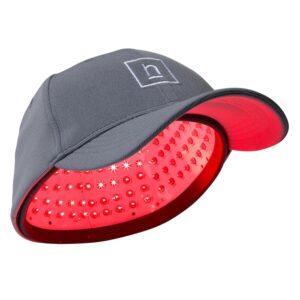
HairMax Laser Cap / LaserBand — Best legacy device
- Type: Laser
- Wavelength: 650 nm
- Session: 3× weekly
- Price: $$$
Why it matters:
- First FDA-cleared LLLT hair device
- Longest track record in the category
📚 Research:
Multiple randomized controlled trials in AGA
Best for:
- Patients who want proven history
- Those preferring less frequent treatments

⭐ Most Popular / Entry-Level Device
iRestore Professional — Best beginner hair growth device
- Type: Laser + LED hybrid
- Wavelength: 650 nm
- Session: 25 min every other day
- Price: $–$$
Why it stands out:
- Widely used and accessible
- Combines laser + LED coverage
- Solid clinical study (small but positive)
📚 Research:
- 4-month randomized trial showing increased hair counts
Best for:
- First-time users
- Patients wanting lower upfront cost
⚖️ Laser vs LED Hair Growth Caps
🔴 Laser Devices
Pros:
- More focused, deeper penetration
- Historically used in clinical trials
Cons:
- Higher cost
- Narrower coverage per diode
🟠 LED Devices
Pros:
- Broader scalp coverage
- Lower cost per diode
- Can target additional pathways (e.g., nitric oxide)
Cons:
- Less concentrated energy per point
⚖️ Bottom Line:
There is no definitive evidence that laser is superior to LED.
➡️ What matters more:
- Wavelength
- Energy delivered
- Compliance (you actually use it)
🏛️ FDA Cleared vs FDA Approved (Important Distinction)
✔️ FDA-Cleared (510k)
- All hair growth caps fall here
- Means: “substantially equivalent” to existing devices
- Does NOT require large clinical trials
✔️ FDA-Approved
- Reserved for high-risk medical devices or drugs
- Requires extensive clinical trials
- 👉 Only minoxidil and finasteride are FDA-approved hair loss treatments.
💡 Who Is a Good Candidate?
Best results occur in:
- Early to moderate androgenetic alopecia
- Patients with miniaturizing (not dead) follicles
- Those using combination therapy
- 🔬 Combination Therapy Works Best
Hair growth caps are most effective when combined with:
- Topical minoxidil
- Oral finasteride (if appropriate)
- Anti-inflammatory scalp care
- Nutritional optimization
📊 Quick Comparison
| Device | Best For | Technology | Time | Price |
|---|---|---|---|---|
| Revian Red | Inflammatory hair loss | LED dual wavelength | 10 min daily | $$$ |
| Capillus | AGA + convenience | Laser multi-wavelength | 6 min daily | $$$ |
| Kiierr | Budget | Laser | 30 min EOD | $$ |
| HairMax | Proven history | Laser | 3× weekly | $$$ |
| iRestore | Beginners | Laser + LED | 25 min EOD | $–$$ |
🤔 Frequently Asked Questions (Hair Growth Caps)
Do hair growth caps actually work?
Yes—low-level light therapy (LLLT) has clinical evidence supporting its use in androgenetic alopecia as well as other types of hair loss. Results are typically modest but meaningful when used consistently over time.
How long does it take to see results?
Most users begin to see results in 3–6 months, with continued improvement up to 12 months. Consistency is critical.
Can I use a hair growth cap with minoxidil or finasteride?
Yes. Hair growth caps are often used as part of a multimodal treatment plan and can be safely combined with medical therapies.
Are there side effects?
Hair growth caps are generally well tolerated. Unlike medications, they do not cause:
- Scalp irritation (common with minoxidil)
- Unwanted facial hair
- Sexual side effects (associated with finasteride)
- Drug interactions
Will a hair growth cap regrow hair in completely bald areas?
No. These devices work best on miniaturizing follicles, not areas where follicles are completely inactive or scarred.
How often do I need to use it?
It depends on the device:
- Daily (6–10 minutes for some caps)
- Every other day (20–30 minutes)
- A few times per week
👉 Following the recommended schedule is essential for results.
Is it worth the investment?
For chronic hair loss (like androgenetic alopecia), these devices can be a worthwhile long-term investment.
For short-term shedding (telogen effluvium), they may be less cost-effective since hair often regrows naturally.
🧾 Final Take
If you want cutting-edge science → Revian Red
If you want clinical laser + efficiency → Capillus
If you want value → Kiierr
If you want proven legacy → HairMax
If you want entry-level → iRestore
👉 The most important factor isn’t the device—it’s correct diagnosis and consistent use.
👉 Schedule a consultation with board-certified dermatologist Dr. Dina Strachan to get a personalized hair loss evaluation and treatment plan.