Laser Hair Removal for Pilonidal Sinus | New York, NY
If you have had a pilonidal cyst, pilonidal sinus, or surgery for pilonidal disease, your surgeon may recommend laser hair removal to help reduce the risk of the problem coming back.
At Aglow Dermatology in New York City, we offer laser hair removal for pilonidal sinus disease, including treatment of unwanted hair in the natal cleft, intergluteal or gluteal cleft, and surrounding buttock area.
Laser hair removal may be especially helpful after pilonidal cyst surgery because hair can contribute to irritation and recurrence in this area.
Aglow Dermatology is led by board-certified dermatologist Dina D. Strachan, MD, who has extensive experience performing laser treatments on patients with a wide range of skin tones.

What Is a Pilonidal Cyst or Pilonidal Sinus?
Pilonidal disease typically develops in the crease between the buttocks near the tailbone. This crease is called the natal cleft, gluteal cleft, or intergluteal cleft.
A pilonidal sinus is a small tunnel or tract beneath the skin. Hair can become embedded in the skin and contribute to inflammation, cyst formation, infection, abscesses, and recurrent disease.
Some people experience a single episode. Others develop repeated cysts, drainage, pain, or infection and eventually require surgery.
Because hair plays an important role in pilonidal disease, reducing the amount of hair growing in and around the natal cleft may be an important part of preventing recurrence.
Does Laser Hair Removal Help Prevent Pilonidal Cysts From Coming Back?
There is increasingly strong medical evidence that it can.
A randomized clinical trial published in JAMA Surgery studied 302 adolescents and young adults with pilonidal disease. Patients were randomly assigned to standard care alone or standard care plus laser epilation.
At one year, recurrence was significantly lower among patients assigned to laser treatment. Among patients with one-year follow-up data, recurrence occurred in 10.4% of the laser group compared with 33.6% of the standard-care group, a difference of 23.2 percentage points.
The researchers concluded that laser epilation used along with standard care significantly reduced recurrence and should be considered an important treatment option for eligible patients with pilonidal disease.
Read the study: Laser Epilation as an Adjunct to Standard Care in Reducing Pilonidal Disease Recurrence — JAMA Surgery (opens in new tab)
A later systematic review and meta-analysis of randomized controlled trials also found a significant reduction in pilonidal disease recurrence among patients receiving laser hair epilation. PubMed Central (PMC) (opens in new tab)
Laser hair removal does not guarantee that pilonidal disease will never recur, and it does not replace appropriate treatment of an active cyst, abscess, or sinus. It addresses one of the factors that can contribute to the problem: hair in and around the natal cleft.
Laser Hair Removal After Pilonidal Cyst Surgery
Laser hair removal is often considered after pilonidal cyst surgery to reduce hair growth around the surgical area.
This is different from ordinary cosmetic hair removal. The goal is to decrease the amount of hair that can collect in or penetrate the skin of the natal cleft and potentially contribute to recurrent pilonidal disease.
If your surgeon has recommended laser hair removal after pilonidal surgery, you can schedule an evaluation at Aglow Dermatology.
The timing of treatment is important. We generally do not perform laser hair removal directly over an open, actively infected, draining, or incompletely healed surgical wound.
If you have recently had surgery, we will evaluate the area to determine whether the skin has healed sufficiently for laser treatment. We may also coordinate the timing with recommendations from your surgeon.
What Area Is Treated for Pilonidal Disease?
Laser hair removal for pilonidal disease isn’t simply cosmetic laser hair removal of the buttocks.
Depending on where your hair grows and the location of your pilonidal disease or surgical site, treatment may include the:
- Natal cleft
- Intergluteal or gluteal cleft
- Sacrococcygeal area near the tailbone
- Upper buttocks surrounding the cleft
- Hair-bearing skin surrounding a healed pilonidal surgical site
The exact treatment area is determined individually.
If you’re experiencing bumps elsewhere on the buttocks, see our guide to butt acne, folliculitis and other causes of bumps on the buttocks. A painful or draining lesion within the gluteal cleft may be different from ordinary folliculitis or acne and should be properly diagnosed.
How Does Laser Hair Removal for Pilonidal Sinus Work?
Laser hair removal directs energy toward pigment within the hair follicle. The absorbed energy damages the follicle and reduces its ability to produce hair.
Because individual hairs are in different phases of the growth cycle at any given time, laser hair removal requires multiple sessions.
The goal is long-term hair reduction, not necessarily permanent removal of every hair.
You can learn more about how the procedure works on our NYC laser hair removal page.
What Laser Does Aglow Dermatology Use?
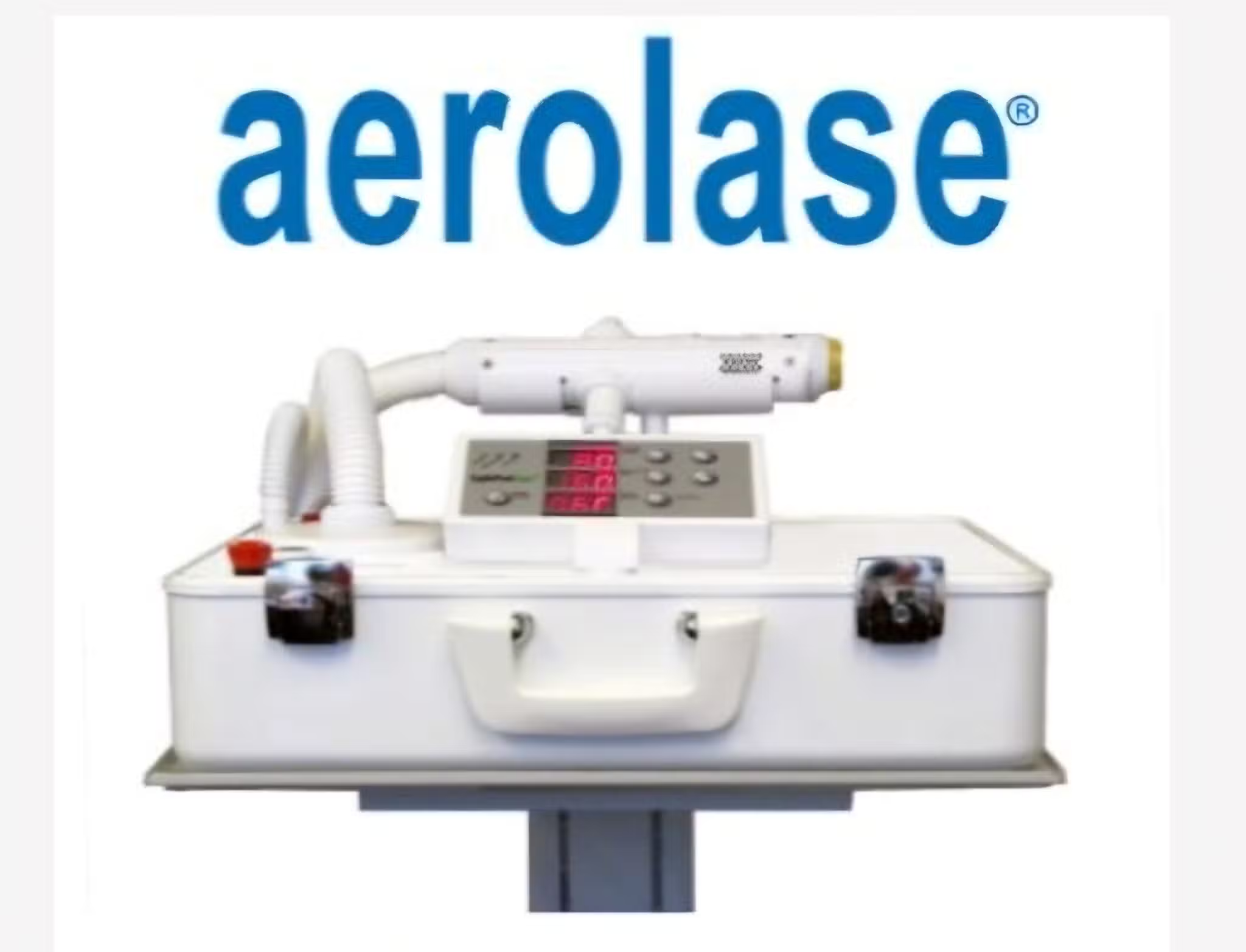
Aglow Dermatology uses the Aerolase Neo 1064-nm Nd:YAG laser for laser hair removal.
The 1064-nm wavelength is particularly useful in dermatology because it can be used across a broad range of skin tones when appropriate settings and techniques are used.
This is especially important for people with Black, brown, or other melanin-rich skin. Laser energy that is excessively absorbed by epidermal pigment can increase the risk of burns and post-inflammatory changes in skin color.
Dr. Strachan has extensive experience treating skin of color. You can learn more about laser hair removal for dark skin at Aglow Dermatology and our approach to dermatology for skin of color.
Laser hair removal works best when the hair contains pigment. White, gray and some very light blonde or red hairs may not respond adequately because the laser needs pigment within the hair as its target.
How Many Laser Hair Removal Treatments Will I Need?
Pilonidal laser hair removal requires a series of treatments because not every hair follicle is in an actively growing phase at the same time.
Aglow Dermatology Pilonidal Laser Hair Removal Package
5 treatments: $1,000
Treatments are generally spaced approximately 4 to 6 weeks apart, although your dermatologist may modify your treatment schedule based on your skin, hair growth, surgical history and response to treatment.
The JAMA Surgery randomized clinical trial also used a course of five laser treatments administered every 4 to 6 weeks. JAMA Network (opens in new tab)
Some patients may need additional treatments or periodic maintenance as hair regrows.
Does Laser Hair Removal of the Natal Cleft Hurt?
Most patients tolerate laser hair removal well.
The natal cleft is a sensitive area, so you may experience brief warmth, tingling, or a snapping sensation during treatment. Because the treatment area is relatively small, the procedure itself is generally quick.
Your dermatologist can discuss what to expect before treatment.
Can I Have Laser Hair Removal if I Currently Have a Pilonidal Cyst?
It depends on what is happening in the area.
Laser hair removal is not a treatment for an acute pilonidal abscess and does not replace drainage, antibiotics when medically indicated, or surgery when those treatments are necessary.
If you currently have significant pain, swelling, drainage, an open wound, or signs of infection, the active problem should be evaluated first.
Once the condition has been appropriately treated and the skin is suitable for laser therapy, laser hair reduction can be considered as part of a strategy to reduce future hair growth in the area.
Can I Have Laser Hair Removal Over My Pilonidal Surgery Scar?
Possibly.
Having a surgical scar does not automatically mean that the surrounding area cannot be treated. What matters is whether the surgical site has healed adequately and whether the skin is appropriate for laser treatment.
Dr. Strachan will evaluate the scar and surrounding skin before treatment. We generally would not laser directly over an open, draining, infected, or incompletely healed wound.
If your surgery was recent, bring your surgeon’s recommendations with you or let us know when the procedure was performed.
Is Laser Hair Removal for Pilonidal Disease Covered by Insurance?
It may be, depending on your insurance plan and circumstances.
Most routine laser hair removal is considered cosmetic. However, hair removal performed as part of the management of pilonidal disease or following pilonidal surgery may be considered medically necessary under some insurance policies.
Coverage varies by insurer and individual health plan. Your insurer may require documentation of your diagnosis, previous treatment or surgery, recurrent disease, or a recommendation from your surgeon.
A letter of medical necessity or referral from your surgeon may be helpful.
Patients should contact their insurance company to determine their specific benefits, authorization requirements and coverage. Insurance coverage cannot be guaranteed.
For patients paying directly, Aglow Dermatology offers:
5 pilonidal laser hair removal treatments for $1,000.
Is Pilonidal Laser Hair Removal Only for Men?
No.
Pilonidal disease occurs in both men and women, and laser hair removal can be considered regardless of sex or gender.
Whether treatment is appropriate depends on your pilonidal disease history, current condition of the skin, hair characteristics, skin type, surgical history and other individual factors.
Is Laser Hair Removal for Pilonidal Disease Safe for Dark Skin?
Laser hair removal can be performed on dark skin, but the laser technology, settings and experience of the person performing the treatment matter.
Aglow Dermatology specializes in treating patients with skin of color and uses a 1064-nm Nd:YAG laser for laser hair removal.
Patients with melanin-rich skin may be at greater risk of burns or pigment changes if inappropriate laser technology or treatment parameters are used.
Learn more about laser hair removal for Black and brown skin.
Why See a Dermatologist for Pilonidal Laser Hair Removal?
Many businesses offer cosmetic laser hair removal. Pilonidal disease, however, is a medical condition.
A dermatologist can evaluate the skin, determine whether an area is sufficiently healed for laser treatment, distinguish active disease from other skin conditions, select appropriate laser parameters for your skin type, and recognize complications if they occur.
This can be particularly important when laser treatment is being performed near a previous surgical site or on darker skin.
Laser Hair Removal for Pilonidal Sinus in NYC
If your surgeon recommended laser hair removal after pilonidal cyst surgery, you have recurrent pilonidal disease, or you want to find out whether reducing hair in the natal cleft could be appropriate for you, schedule an appointment with Aglow Dermatology.
Aglow Dermatology provides dermatologist-directed laser treatment in Midtown Manhattan and has extensive experience treating patients of all skin tones.
Pilonidal Laser Hair Removal Package
5 treatments for $1,000 for self pay patients
Schedule an appointment for laser hair removal for pilonidal sinus disease in NYC.